How to choose an engagement ring
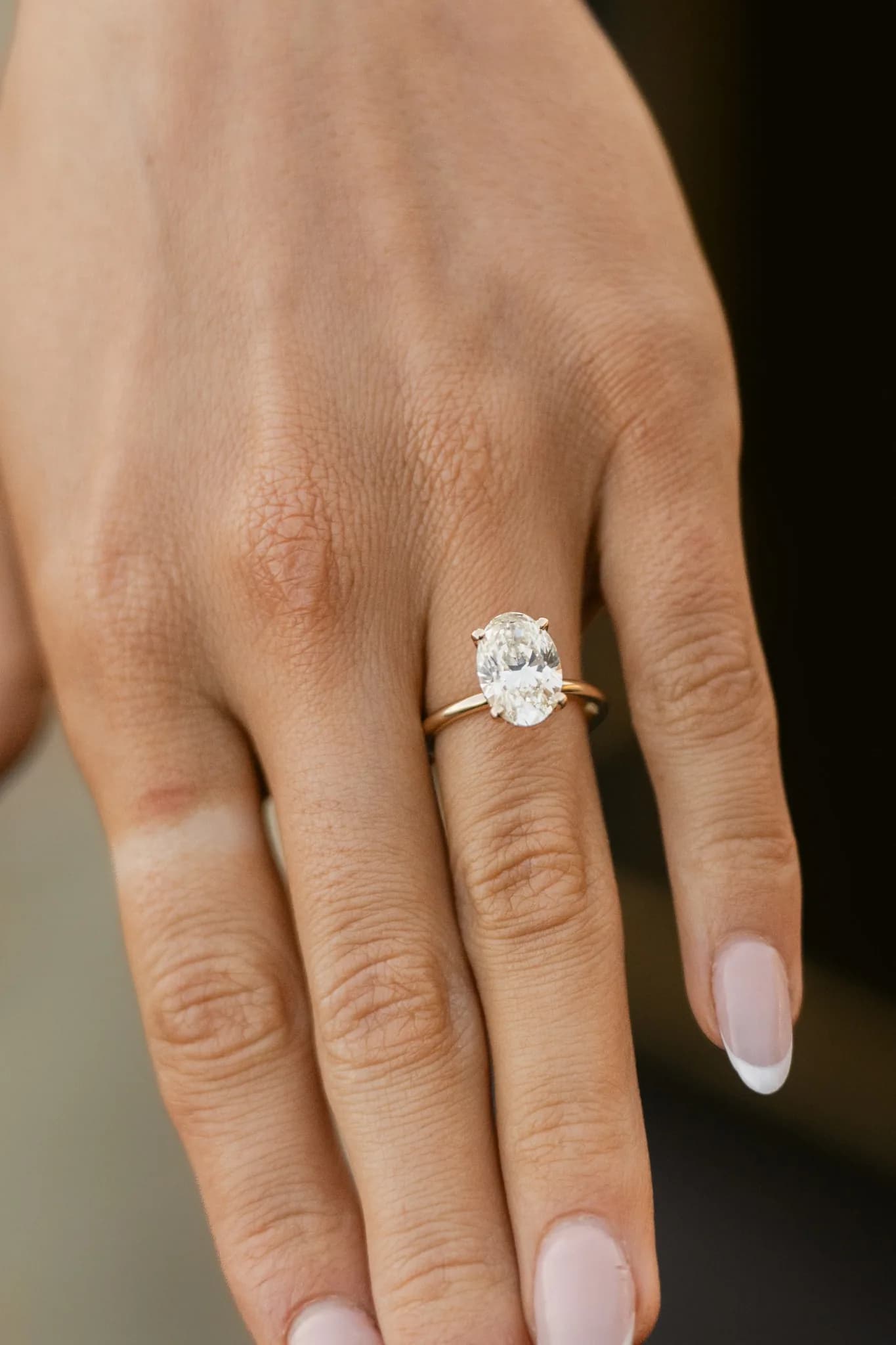
Imagine an ordinary Tuesday on your partner’s hand. Do they garden, play an instrument, wear gloves or turn every ring so the stone faces their palm? Those details tell you more about a ring they will love wearing than a photograph in a shop window.
By ERIA Events
Start with the person who will wear it
Ask how much they want to choose. Some people have a saved design. Others would love to try on rings together after the proposal. A letter, a simple band or a borrowed family ring offered with permission can stand in for a ring you will choose as a couple.
Look at the jewelry they actually reach for. Note the metal color, how high their rings sit and whether they stack bands. Bring two reference pictures to the appointment and say what your partner likes about each.
Read the four Cs in ordinary light
Ask the jeweler to show you two loose diamonds within the same budget. See each in the display lights and in softer light beside a window. Use the grading report to connect what you see to the stone in front of you.
- Cut describes how the facets work with light. For a round brilliant with a GIA cut grade, ask to compare examples side by side.
- Color measures the degree of color in the standard D-to-Z diamond range. Compare the stones beside the metal you intend to use.
- Clarity describes internal inclusions and external blemishes. Ask to see them under magnification and then look again with your own eyes.
- Carat measures weight. Two diamonds with the same carat weight can face up differently. Compare their actual millimeter measurements on a hand.
Try on the outline before choosing a cut style
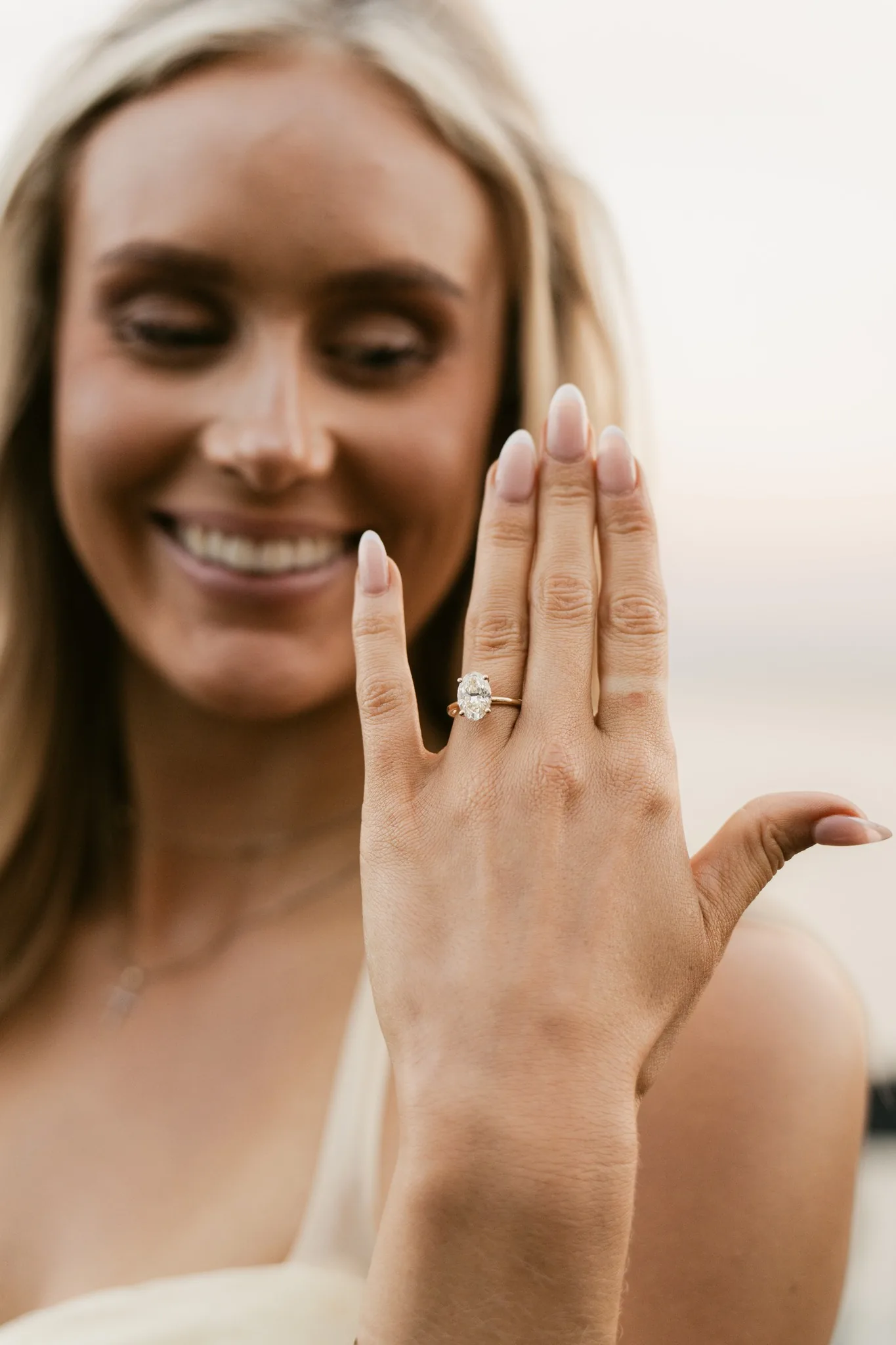
Round, oval, pear and emerald describe outlines or familiar combinations of outline and facet pattern. An emerald-cut diamond usually has long step-like facets. A round brilliant has a different pattern and a different play of light. The word “cut” on a quality report has a more specific meaning than the shape name in a shop.
Try the same rough dimensions in a round and an elongated shape. Look from the side as well as from above. For a pointed pear or marquise, ask how the setting will protect the tip.
Compare natural diamonds, laboratory-grown diamonds and colored stones
Natural and laboratory-grown diamonds have essentially the same chemical, optical and physical properties and different origins. A diamond simulant such as cubic zirconia is a different material. Ask the seller to name the material, its origin and any treatments in writing.
For a colored center stone, compare sapphire or ruby with softer stones such as opal. Ask how that specific stone handles impact, cleaning and daily wear. An heirloom stone deserves a jeweler’s inspection before you commission a new setting.
Choose a setting and metal for daily wear
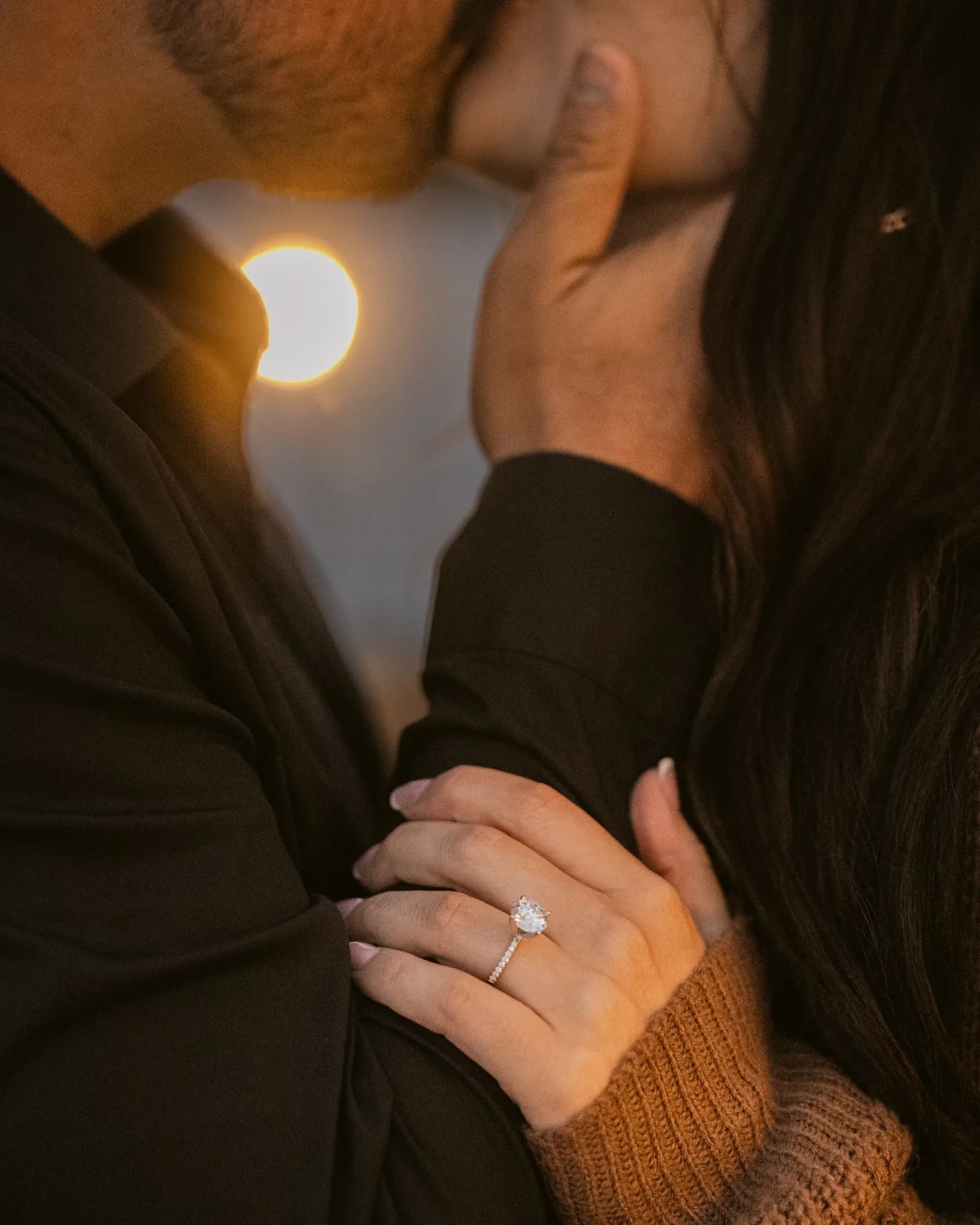
A prong setting exposes more of the stone. A bezel wraps a rim of metal around it. Run a sample across a knit sleeve, check how high it sits under a glove and try the wedding band beside it. Pavé around a band adds small accent stones and may limit future resizing.
Compare yellow gold, rose gold, white gold and platinum on the hand. Ask about the alloy, possible skin sensitivities, finish, maintenance and any replating for white gold. A jeweler can show how a polished and a brushed finish look on the same band.
Check fit, budget and the paperwork
Ask to measure the intended finger and try a sample close to the final band width. If you are shopping in secret, bring a ring your partner regularly wears on that exact finger with their permission, or choose a jeweler who can fit the ring after you ask.
Set an amount you can comfortably spend, including the setting, sizing, tax and any engraving. Ask for an itemized quote. Record the return deadline, whether a custom or engraved ring is final sale, resizing terms and when work must begin for the ring to arrive in time.
For a diamond, ask which laboratory issued the report, what service it used and how the stone matches the document. GIA has a distinct assessment service for eligible laboratory-grown stones. Compare like reports and verify the report number with the issuing lab. Request a separate appraisal if your insurer requires one.
From ERIA’s proposal albums
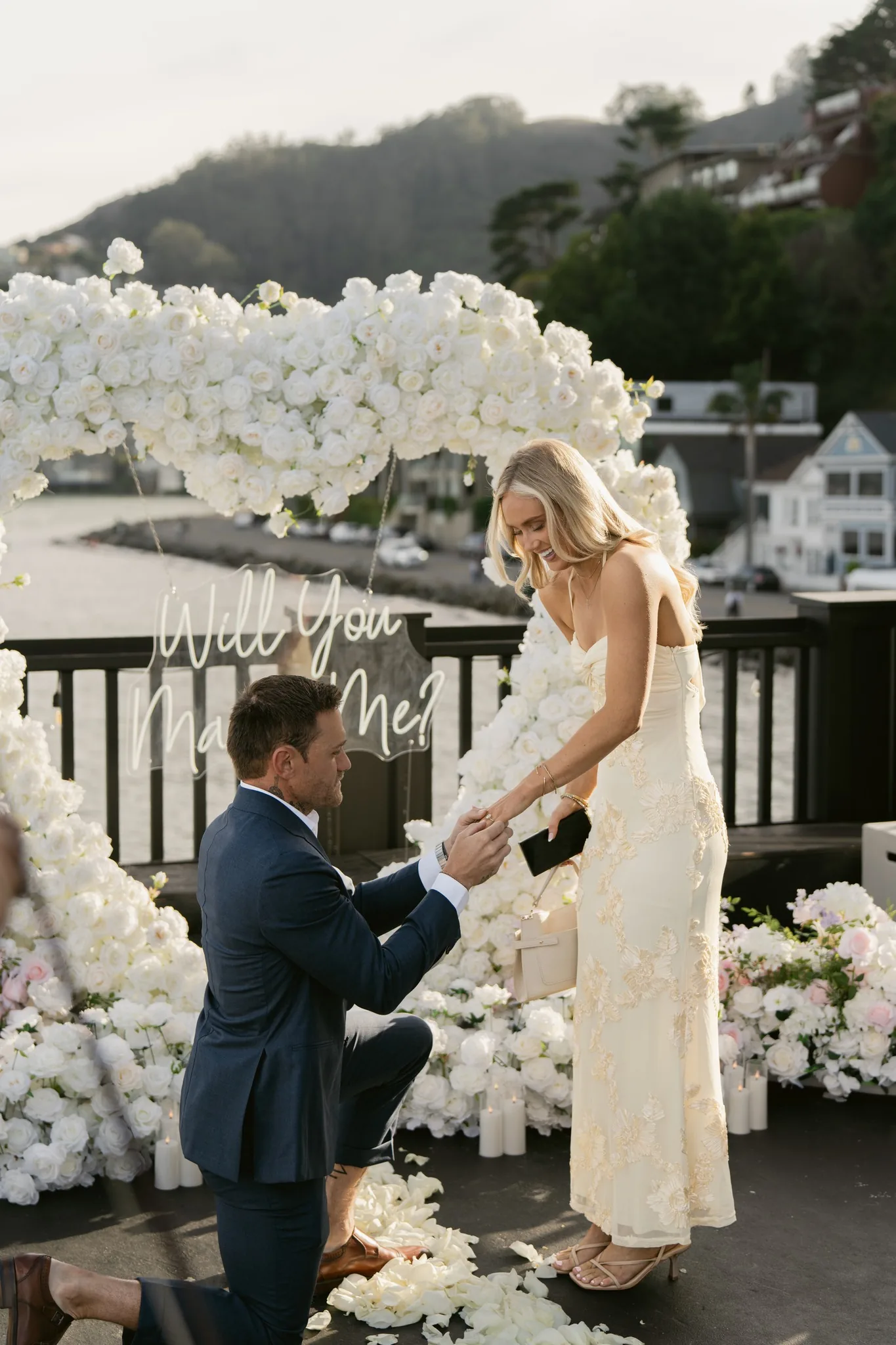

Plan a proposal with ERIA
Tell our team what your partner loves, your preferred dates and the budget you have in mind. We can discuss a private celebration at ERIA Marina in San Francisco or help plan at another Bay Area location.