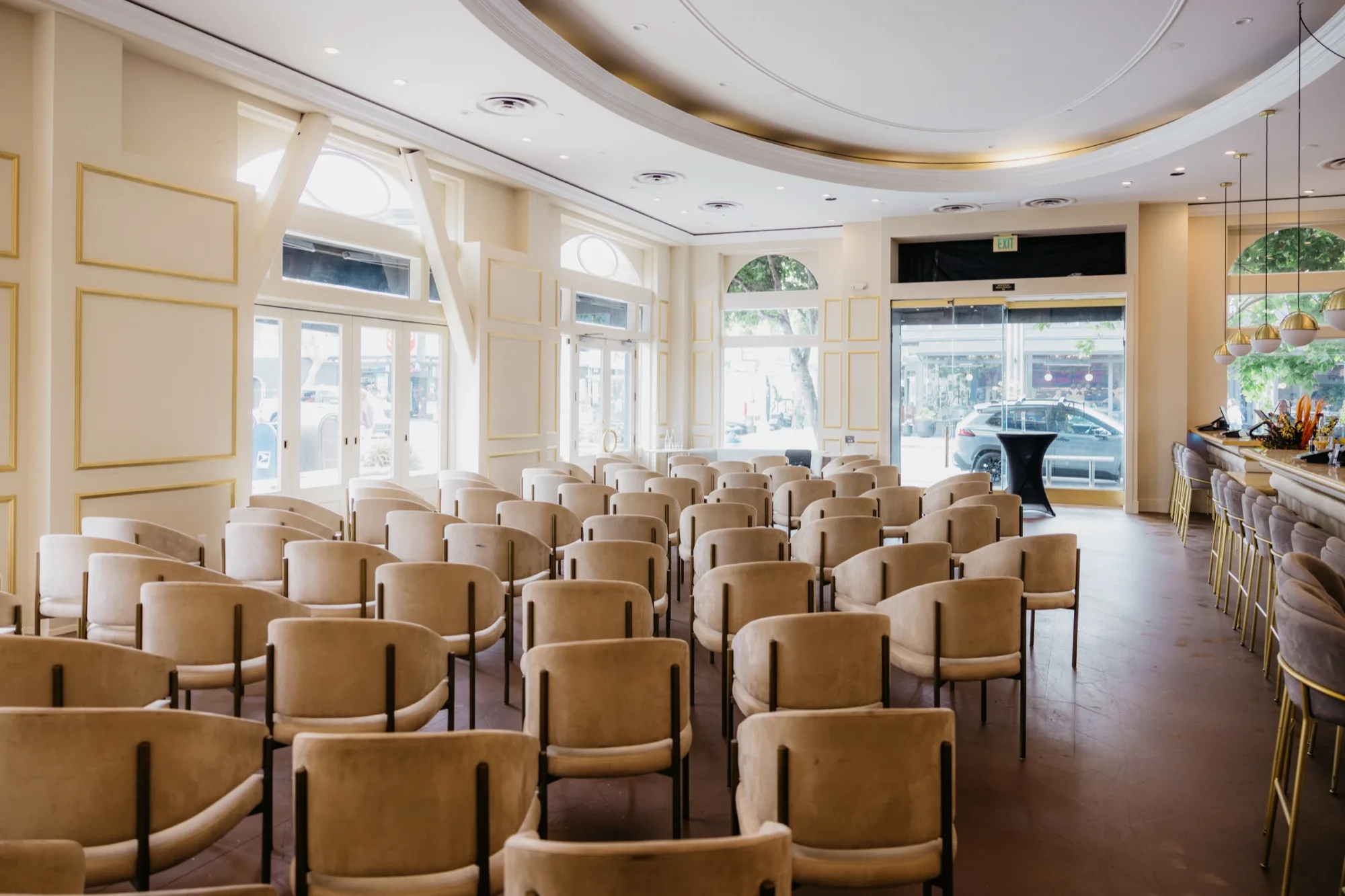
Six teams with five-minute pitches already account for half an hour before questions, stage changes or judging. Start with the number of founders who deserve a full hearing, then build the evening backward from the awards and the last guest departure.
Write a running order the judges can use
Give every team the same pitch and question windows. As a working example, six five-minute pitches with three minutes of questions use 48 minutes before changeovers. Name a timekeeper, brief the emcee on each founder's pronunciation and set a clear deadline for scorecards.
Test the smallest text in the deck
Use ERIA Marina's projector and discuss how its four TVs could support views from different tables. Bring slides in one master file with a local copy, and ask a teammate to read the smallest slide from the back row. If a team needs a live product demo, rehearse it on its presenting device and agree on a recorded fallback.
Use judging time for introductions
Give judges a reserved table and name the person who collects their final choice. While they deliberate, open clearly labeled founder stations so students can meet teams they heard on stage. Invite each team to list what it is seeking, whether that is user feedback, a technical mentor or its next hire.
Planning questions
How can we fit a pitch competition into a shorter evening?
Collect semifinal pitches in advance and feature fewer finalists in person. Keep the full question period for the finalists and invite other teams to show their work during the reception.
What should a university accelerator send for a venue proposal?
Include the number of teams and judges, seated audience count, device and display requirements, rehearsal window and whether judges need a separate conversation area. Confirm the available layout before publishing the competition schedule.