Event Planning · November 16, 2026 · ERIA Events · 7 min read
Start with the gathering you want to host
A baby shower for twenty people can feel like a particularly lovely lunch. At forty, it may bring two families and several groups of friends together. At sixty, the hosts need a more deliberate way to welcome everyone, serve the meal and give the parents time with their guests. ERIA’s Sausalito and San Francisco venues offer different settings for that conversation. The useful starting point is the experience you want, followed by a layout that supports it.
The guest counts below are planning examples, not venue capacity limits or fixed ERIA packages. Before comparing layouts, decide whether your number includes the parents, cohosts, partners and children. Keep the invited count and the confirmed count separate. A list of twenty households can become a much larger party once everyone attending is named.
Twenty guests: design around one shared conversation
With twenty people, you can give the meal a strong sense of togetherness. One long table may suit a group who already know each other, while several smaller tables can make conversation easier for guests who prefer talking with their immediate neighbors. Ask to see the actual table dimensions and the room around them. A long table looks beautiful in a photograph, but guests at opposite ends will not automatically share the same conversation.
Keep the other pieces of the celebration proportionate. A cake display, a place for cards and one thoughtful activity may be all the additional furniture you need. The guest of honor should be able to sit among the group, move to a different conversation and step away without crossing a presentation area every time. Leave useful open space instead of filling the room simply because it is available.
A small gathering still needs someone to receive the cake, tell the service team when everyone has arrived and gather belongings at the end. Assign those jobs before the day so the person hosting the conversation is not also disappearing into a delivery call.
Forty guests: make introductions and movement easy
At forty guests, the party often contains several social groups. This is the point at which an arrival plan becomes especially valuable. Put a welcoming person where guests actually enter, and give newcomers a clear next step: leave a gift, collect a drink or join a particular table. Without that first introduction, friends who arrive alone can spend the opening minutes searching for someone they recognize.
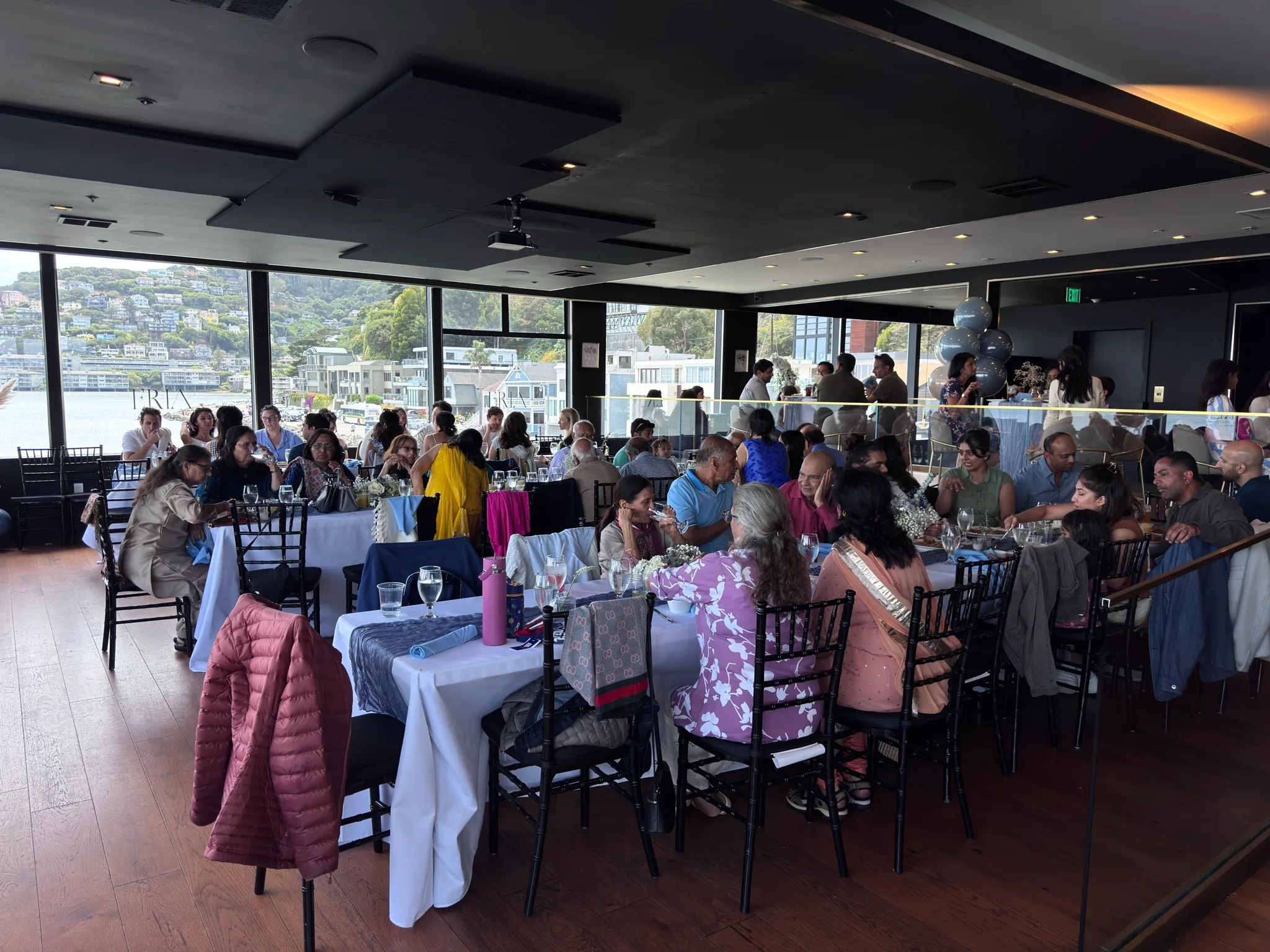
For a seated meal, consider assigning tables without assigning every chair. Each guest has a place to return to, while the table retains some freedom. An illustrative layout might use five tables of eight or four tables of ten, but the venue must confirm whether those table sizes, service aisles and chair positions fit the proposed room. Do not choose a table count before considering the catering setup.
A buffet, dessert display and drinks station all attract people. Putting them together may create one long queue across the room. Review the route a guest will take with a plate in hand, and keep that route separate from the place where family photographs will happen. These practical lines on a floor plan are more useful than adding another decorative station.
Sixty guests: give the celebration a clear center
A sixty-person shower can still feel personal when guests know where the main gathering is happening. Set one clear location for a welcome, toast or other shared moment, with seats and sightlines considered from the beginning. Ask whether amplification would help people hear comfortably. The answer depends on the room, background sound and the kind of moment you are planning, not only the headcount.
The meal needs an equally clear plan. For plated service, discuss the order of service and how dietary meals will reach the right guests. For a buffet, ask the caterer how guests will be invited up and how dishes will be replenished. A second service point may help some layouts, but it also requires room, equipment and staff. Let the caterer design a workable service arrangement rather than assuming that twice the food means twice the buffet tables.
The parents will also need a realistic way to see everyone. Encourage them to visit tables during the relaxed parts of the event instead of relying on a receiving line or a photograph with every guest at the same moment. Keep any formal welcome concise and leave a generous stretch of the party for ordinary conversations.
Draw the whole event, not just the dining tables
Ask for a layout that includes every object large enough to change how people move. A floor plan that only shows chairs can look spacious until a stroller, gift table, cake stand and photographer’s equipment arrive. Review the version that reflects your actual celebration, including the indoor arrangement if you are considering any outdoor time.
Walk through four journeys on that plan: a guest entering with a present, someone taking a plate back to a seat, the parents moving toward the cake, and staff clearing after the meal. If those journeys cross at the same narrow point, reposition a station before adding more furniture.
- Mark the entrance, coat and bag storage, and the route to the restrooms.
- Show dining seats, service stations and space behind occupied chairs.
- Give gifts and personal belongings a collection point that stays clear of exits.
- Place the cake where it can be photographed and then served without dismantling the room.
- Include any access needs in the layout conversation before the booking is finalized.
Use the guest count to settle decisions in the right order
Begin with an initial list, choose a suitable format and request the corresponding venue and catering proposal. Once invitations are answered, check the confirmed count against the agreed deadline for final numbers. Keep one list that records names, attendance, meal information and relevant seating requests. One shared version prevents a late reply from living only in a cohost’s text messages.
If the count changes, review the entire layout instead of simply removing chairs. A smaller attendance might allow a more connected table arrangement; a larger group might require a different service plan. Ask which proposal items change with attendance and which remain fixed. Our budget and cohost guide goes further into comparing those costs, while the brunch guide helps shape the meal itself.
Send ERIA a useful first brief
Share your preferred date, estimated attendance, the venue you are considering and the overall budget you want the proposal to respect. Add a sentence about the party: a seated family lunch, an afternoon with friends, or a larger gathering with partners and children. Tell us whether you expect a full meal, a cake moment, gifts or a particular activity.
That short brief gives the team something concrete to work with. From there, the conversation can focus on the room, service and details that will make your particular group feel welcome.
Questions hosts ask
Should we book using the invited number or the expected attendance?
Share both figures when requesting a proposal, then agree on the deadline and terms for the final guaranteed count. Avoid assuming a standard percentage of guests will decline.
Does a larger baby shower need more games?
No. A clear welcome, a well-planned meal and time for conversation can give the event its structure. Choose activities because the parents and guests will enjoy them.
Are these guest counts ERIA’s capacity limits?
No. They are planning examples. ERIA confirms the appropriate room, seated layout, service arrangement and current approvals for your specific event.
Keep planning your celebration
Build a budget with your cohosts
Explore waterfront baby showers
Explore all planning guides → Sausalito celebrations →
Plan With ERIA
Ready to bring this to life?
Tell us what you are planning. Our team will help you shape the experience from first idea to final detail.
Start a Conversation