Event Planning · November 16, 2026 · ERIA Events · 8 min read
A coed baby shower gives you permission to gather the people the parents-to-be actually want in the room. Partners, siblings, friends and colleagues can all be part of the celebration. Once the guest list expands beyond a traditional format, the afternoon can become a lovely shared occasion built around those relationships.
It does not need a competition to prove that everyone is having fun. A room full of people talking over lunch is already a successful party. The host's job is to make that conversation possible, then give the celebration one or two moments that feel connected to the family being welcomed.
At ERIA Sausalito, begin with the kind of gathering you want to host: a sociable lunch, a late-afternoon reception or an intimate meal with your closest people. Confirm the event space and service arrangements with the team before building the details around it.
Decide what “coed” means for your invitation
The most useful part of an inclusive guest list is clarity. If partners are invited, name them or indicate the invitation clearly. If children are welcome, say so. If you are keeping the gathering to adults, communicate that directly and kindly rather than leaving guests to guess.
There is no need to announce a new set of rules for the shower. Describe the event itself: “Join us for lunch to celebrate the parents-to-be” tells guests more than a label alone.
Talk to both parents about the guest list and how much attention they want. One may love speaking to the room while the other would prefer to spend the afternoon in small conversations. Equal celebration does not require identical roles. Agree on a format that suits them both before planning a surprise performance or a round of personal questions.
Build the party around a complete meal or a clearly defined reception
When guests do not know one another well, food gives the afternoon a natural shape. They can arrive, settle with a drink, sit or circulate for the meal, then enjoy a brief shared moment before dessert.
Be specific about what you are offering. “Light refreshments” sets different expectations from “lunch.” If the event overlaps a usual mealtime, discuss a menu substantial enough for the occasion with the caterer. Avoid relying on a beautiful dessert display to carry the whole gathering unless that is clearly the invitation.
For a seated meal, consider how guests will meet before taking their places. For a standing reception, confirm enough appropriate seating for people who want it. A lively room should offer choices about how to participate.
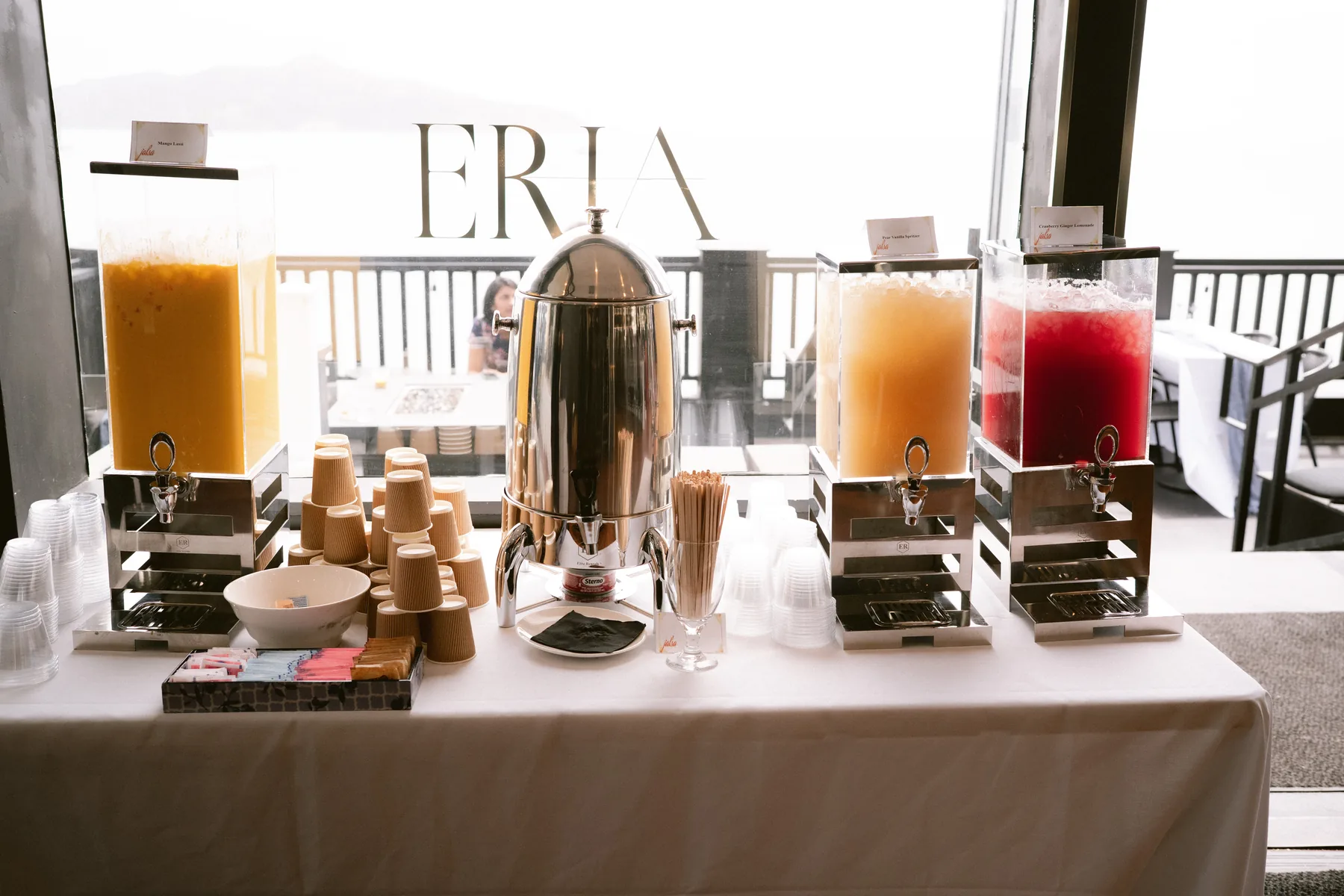
Keep nonalcoholic drinks as thoughtfully considered as any other part of the menu. A carefully prepared seasonal drink, appealing glassware and attentive replenishment help all guests feel included. Confirm beverage options and service terms with the venue rather than planning an independent bar arrangement.
Use introductions that give people somewhere to begin
“Everyone, this is my friend” is technically an introduction, but it leaves a lot of work to the people being introduced. Add one useful connection.
“This is Priya, who has been helping us find children's books, and this is Daniel, who used to work in publishing” gives two people an easy opening. The details can be small. A shared neighborhood, a favorite restaurant or a similar hobby is enough.
Ask two or three hosts who know different sides of the group to help make these connections. They do not need to act as entertainers. Their role is to notice the person who has just arrived or the couple standing beside the entrance without an obvious place to join.
Avoid introductions that reveal personal news or frame someone through a sensitive subject. People should have the choice to tell their own stories.

Replace compulsory games with a few good invitations
A small activity can give guests something to enjoy between conversations. The difference lies in how it is offered.
A note station might ask guests to write one wish for the family. A book table could invite a short dedication inside a book they brought, if that request was communicated in advance. A card collection might ask for a favorite easy dinner to share with the parents later. Keep the prompt brief and the materials obvious.
Choose one of these ideas rather than setting up every possible station. Too many tasks can make a party feel like a series of assignments. Leave the table available throughout the event so people can contribute when it suits them.
If the parents enjoy a playful element, create a short activity they genuinely like. A music-loving couple might enjoy guests suggesting one song for a family playlist. There is no reason to divide teams by gender or ask intimate questions for laughs. The best activity sounds like something these particular people would enjoy outside a baby shower too.
Give the parents a moment together
The gathering still deserves a recognizable center. A brief welcome or toast can bring everyone together without turning the afternoon into a program.
For example, in a hypothetical 40-person lunch, the hosts might welcome guests once the first course has been cleared. One friend shares a two-minute reflection, the parents offer a short thank-you if they wish, and the meal continues. Later, dessert provides another natural point for photographs and conversation. This is an illustrative sequence, not a service schedule or ERIA package.
Tell speakers what the moment is for and how long they have. Ask them to celebrate the people in front of them, avoiding unsolicited parenting instructions or private stories the parents have not chosen to share.
If the parents prefer no speeches, a written note at each place or a personal greeting from the hosts can provide the same sense of intention.
Decide about gifts before the day
Public gift opening can take longer than expected and changes the energy of the room. Some parents love it; others would rather spend that time talking with guests. Ask them, then make a clear plan.
If gifts will be opened later, designate someone to receive them, keep cards attached and arrange transport home. Guests who have brought something special should still feel acknowledged. A warm personal thank-you when they arrive is often more meaningful than watching every parcel opened in sequence.
If public opening matters, give it a defined place in the event and keep the rest of the schedule lighter. Choose seating that allows people to see comfortably. Do not assume a room arranged for dining will automatically work for everyone watching one focal point.
Choose decor that belongs to the occasion
The most memorable room is not necessarily the one with the most baby-themed objects. You might build the setting around a favorite color, a garden mood, books, or a subtle detail connected to the parents.
Look at the table as a place where people will eat. Flowers should allow guests to see across it; shared platters need room; a place card should be legible. If an activity requires writing, make sure there is a usable surface instead of asking guests to balance cards on their knees.
For ideas, use the ERIA portfolio to identify a few visual choices you like. A small selection with a clear reason is easier to translate into an event than a large collection of conflicting inspiration photographs.
Let the hosts enjoy their own invitation
Assign one person to vendor questions, one to gifts and one to the informal flow of the afternoon. In a smaller gathering, one cohost may cover more than one role, but everyone should know who is responsible.
The parents-to-be should not have to announce dessert, find missing cards or settle the catering schedule. When those details have owners, the afternoon can look pleasantly effortless because the work has already been done.
Coed baby shower questions
Will guests be bored without games?
Give them a comfortable setting, good food, helpful introductions and time with the people being celebrated. Optional activities can add interest, but conversation does not need to be treated as a gap in the program.
Should the invitation say gifts are optional?
Use wording that reflects the parents' wishes and makes attendance feel welcome regardless of a gift. If there is a registry or book request, communicate it without making it a condition of coming.
Can we host a shower as a reception instead of brunch?
Yes, that can be your event brief. Confirm the food quantity, seating, timing and service arrangements with the venue and caterer so guests know what to expect.
What information helps ERIA propose the right format?
Share your date range, expected guest count, whether children are invited, preferred meal style and the atmosphere you want. Start a baby shower inquiry with those details and any practical needs that affect the plan.
Explore all planning guides → Sausalito celebrations →
Plan With ERIA
Ready to bring this to life?
Tell us what you are planning. Our team will help you shape the experience from first idea to final detail.
Start a Conversation
