Founder Journal · November 15, 2026 · Nikita Khandheria · 4 min read
I use the word excellence often, so I think it is worth being precise about what I mean by it. I do not mean that I expect a person to arrive at every correct answer immediately. I do not mean that a first idea should survive unchanged. And I do not mean that caring deeply about the work requires being permanently dissatisfied.
I think of excellence as something that continues to move. You keep educating yourself, experimenting and improving. That description leaves room for development. A demand for instant perfection does not.
I want a high standard that can guide the work while the work is happening. If the standard only tells me that the result is never enough, it is not giving me much useful direction.
Name what the work needs to achieve
A hypothetical event plan can be assessed against its purpose. Does it give people enough time for the conversations the host cares about? Does the sequence support the intended atmosphere? Are the practical arrangements clear enough for the people delivering them?
Those are demanding questions, but they have an object. They help us examine the actual plan. By comparison, deciding that everything must be perfect can expand endlessly without becoming more informative.
This is one reason I value a clear brief in event planning. It helps distinguish a necessary improvement from an attractive distraction. A change may make a document more elaborate while contributing very little to the occasion. Another change may seem small and resolve a real problem. The standard should help us tell the difference.
It should also make priorities visible. When everything is described as equally essential, the people doing the work receive very little guidance about where their attention matters most.
Allow an idea to develop
There is a difference between presenting unfinished work carelessly and allowing a thoughtful idea to go through revision. The second is part of making something good. A concept can be promising before every detail has been resolved.
Expecting the first version to be complete encourages people to hide uncertainty. I would rather understand where the questions are while there is still time to answer them. An honest working conversation is more useful than a polished presentation that disguises the parts nobody has examined.
This does not require lowering expectations. It requires matching expectations to the stage of the work. An early conversation may need to establish the intention. A later plan must address the practical decisions. Judging both stages as though they are the finished event makes development unnecessarily difficult.
A correction needs proportion
I care when I feel I have underdelivered. But caring does not remove the need to assess what happened accurately. The size of my emotional reaction should not automatically determine the size of the conclusion.
If one element needs attention, I want to identify that element. If a wider assumption was wrong, I want to understand the assumption. A vague declaration that the whole thing was inadequate can obscure the actual work of improving it.
Proportion also allows good decisions to remain visible. If something worked well, that is useful information. We should be able to preserve it while correcting something else. Otherwise, every review risks becoming an unnecessary reinvention rather than a careful assessment.
The ability to say precisely what needs to change is a form of respect for the effort already invested.
Finish with care
The pursuit of excellence has to coexist with delivering something. There is a moment when another round of changes stops adding enough value to justify the disruption it creates. Recognising that moment requires judgement too.
I do not think of completion as giving up on the standard. I think of it as taking responsibility for the whole piece of work, including its timing, clarity and practical use. An endlessly revised plan that nobody can confidently execute has missed something fundamental.
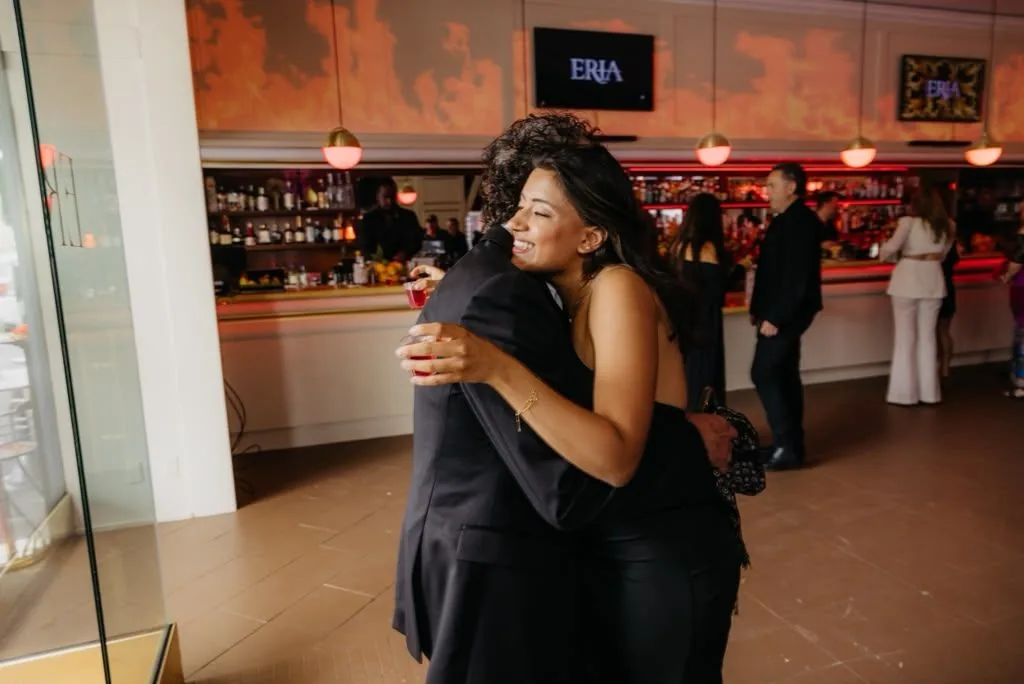
The finished experiences in ERIA's portfolio are occasions people actually attended. That matters. The work is meant to become part of someone's life, rather than remain an abstract possibility that could always be improved in one more way.
I want to keep asking how to do better. I also want the question to remain generous enough to recognise learning, precise enough to identify a real improvement, and practical enough to produce a finished result. A high standard should make the work more thoughtful. It should not make it impossible to complete.
Explore all planning guides → Sausalito celebrations →
Plan With ERIA
Ready to bring this to life?
Tell us what you are planning. Our team will help you shape the experience from first idea to final detail.
Start a Conversation