Founder Journal · November 15, 2026 · Nikita Khandheria · 5 min read
A small guest list can make an event feel promisingly intimate. It does not guarantee that people will feel close. You can place a few people in a room and still give them an evening that feels distant, overly formal or strangely difficult to enter.
Intimacy is something we can support through choices. The way people arrive, where they sit, how easily they can speak, and the amount of attention available to them all contribute.
On The Reluctant Entrepreneur, I described a casual birthday celebration on a yacht with a visiting recording artist. What I find interesting about that combination is the relationship between a distinctive experience and an informal atmosphere. Something special can happen without making the people around it feel they have entered a production too large for them.
Let people understand their place
In a small gathering, every arrival is noticeable. A thoughtful welcome can help someone settle quickly, especially if they do not know everyone. They should be able to understand the tone of the evening without having to guess.
That might mean a clear introduction, a natural place to sit or an easy way to join whatever is already happening. The details depend on the occasion, but the intention is straightforward: nobody should spend the beginning feeling peripheral.
A host can support this by sharing a little about the relationships in the room during planning. Who knows one another well? Who is travelling from farther away? Which guests might appreciate an introduction based on a shared interest?
This is useful information for private celebrations. It tells us how the social experience might unfold, beyond the practical fact that a certain number of people are attending.
Design for the conversation you want
Conversation has physical requirements. People need to hear one another, see one another and remain comfortable enough to stay engaged. A setting can be visually striking while making those things unnecessarily difficult.
I would think about the scale of the arrangement. Are people close enough to speak naturally? Is there room for smaller conversations as well as a shared one? Does the music support the intended atmosphere at each point in the evening?
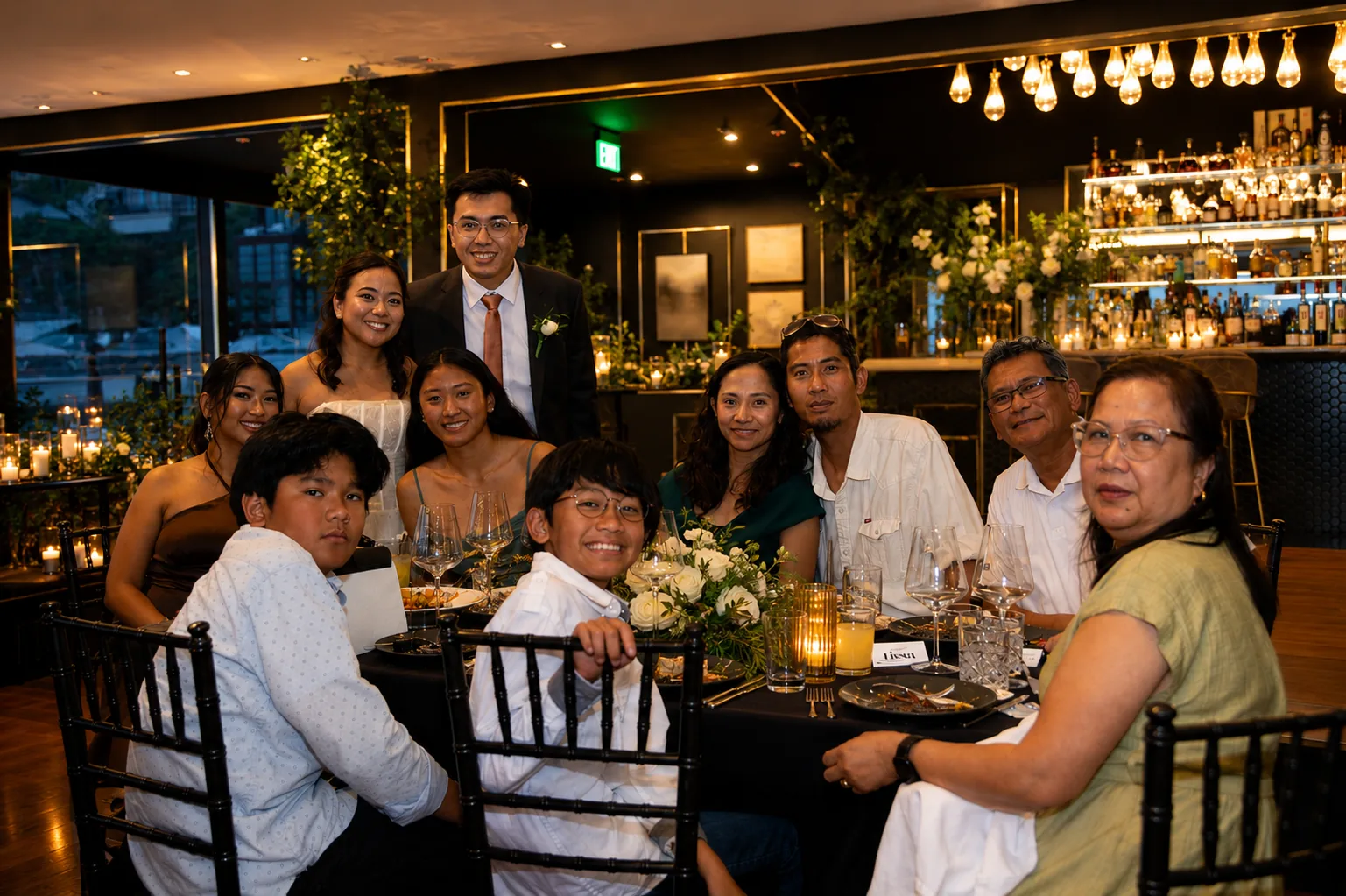
A small dinner does not have to mean one uninterrupted conversation among everyone. Some groups enjoy that. Others appreciate the ability to move, change seats or gather in smaller combinations. The host’s knowledge of their people can help guide the format.
Imagine a celebration bringing together several couples who know the host but have never met each other. A shared experience early in the evening might give them an easy starting point. Later, a relaxed meal could allow those initial conversations to develop. The closeness comes partly from the sequence, not just the size of the table.
Keep the special element in proportion
A performer, a chef, an activity or an unexpected setting can make a private event memorable. The question is how it relates to the guests. Does it draw them into a shared experience? Does it give them something to enjoy together? Does it leave room for their own relationships?
I would avoid assuming that a more elaborate production always adds more value. In an intimate setting, a carefully chosen element can carry considerable weight because people have the opportunity to engage with it closely.
The casual birthday I discussed is a useful starting point for that thought. The distinctive musical experience belonged within the gathering. The guests were still at a birthday, with the personal relationships and atmosphere that make a birthday meaningful.
That balance needs to be designed for each event. A performance might be the centre of the evening or one lovely part of it. Knowing which helps us plan what happens before, during and afterward.
Give attention without making people feel watched
Personal service can make an event feel exceptionally comfortable. It can also become intrusive if every movement seems to attract intervention. Intimacy requires some ease.
I want people to feel considered and able to enjoy themselves naturally. The room should support their experience without continually reminding them of the arrangements behind it. That includes leaving space for a conversation to continue or a moment to develop without unnecessary interruption.
The host also deserves that ease. A small gathering can carry high emotional importance precisely because the guest list is so personal. The planning should help the host be part of it.
When considering a venue, I would ask how the specific event could sit within the space. The useful question is how the arrangement, service and atmosphere can help these particular people enjoy one another.
Intimacy becomes visible in small ways: a guest feels included, a conversation deepens, someone stays at the table because there is no reason to rush. Those moments may be less dramatic than the evening’s main attraction. They are often the reason the gathering feels personal.
Explore all planning guides → Sausalito celebrations →
Plan With ERIA
Ready to bring this to life?
Tell us what you are planning. Our team will help you shape the experience from first idea to final detail.
Start a Conversation