Founder Journal · November 15, 2026 · Nikita Khandheria · 5 min read
Give me someone who cares deeply about a subject and I am likely to find the subject interesting. They do not need a spectacular job title. They need to know something well enough that their enthusiasm has detail.
I said on Bourbon and Business that I would happily listen to someone talk about changing tires if they were passionate about doing it exceptionally well. I meant it. There is something wonderful about meeting a person who can make a supposedly ordinary task seem intricate, demanding and full of judgment.
Those conversations remind me how much skill remains invisible when we only notice the finished result.
Expertise changes what you can see
From a distance, many kinds of work look simpler than they are. A guest sees something beautiful appear at the right moment. The professional behind it sees preparation, choices, limits and a sequence of things that must happen correctly.
I do not think the answer is to make every guest study the production. The ease is part of the experience. But the person planning the work should be interested in the knowledge that makes the ease possible.
That is one of the pleasures of what we do at ERIA. I have described working with mechanical engineers and learning from drone specialists because those conversations let me encounter the world through someone else’s expertise. They can see possibilities and problems that I would not notice on my own.
It would be a waste to bring that person into a project and only ask them to confirm an idea I had already decided was perfect. Their knowledge deserves room to change the idea.
Enthusiasm is an opening, not the whole assessment
I love passion, but I do not confuse it with evidence. A fascinating conversation is a reason to learn more about someone’s work. It is not, by itself, proof that they are the right person for a particular project.
The practical questions still matter. Can they explain their process clearly? Do they understand the conditions of this event? Are they willing to identify what they cannot do? Can we agree on the responsibilities and the result we are trying to create?
I find the ability to name a limitation especially useful. It suggests the conversation is about delivering something real, not simply keeping the enthusiasm alive. An expert who explains why an idea needs to change is contributing to the project. They are not spoiling it.
This is where curiosity becomes a working habit. I want the interesting explanation, but I also want the clear one. The best conversation leaves me both more excited about the possibilities and more accurate about what those possibilities require.
Ask about the decisions people usually overlook
One way to hear the depth of someone’s knowledge is to ask where the judgment lives. Which choice would an outsider underestimate? What looks effortless only because somebody has prepared carefully? Where does a small change make a meaningful difference?
The answers often reveal a richer standard than the initial brief contained. A project that began with a visual preference can become a discussion about pacing, attention or how people will use a space.
Imagine planning a musical moment at a private celebration. It is easy to discuss the song and the appearance. A thoughtful musician may also ask what precedes the performance, what the guests will be doing and what kind of attention the moment should invite. Their contribution can sharpen the event, provided we give them the context to make it.
That is a hypothetical example, but it captures the kind of exchange I value. A specialist is more useful when the project invites their judgment, rather than treating their skill as a button someone can press.
Attention is a form of professional respect
People can usually tell when you are interested in their work and when you are merely waiting for the part relevant to your own idea. I want to be the first kind of listener.
That means allowing a subject to remain complicated for long enough to understand it. It means resisting the urge to turn every explanation into something I already know. It also means accepting that I may leave with a more modest plan because I now understand what doing it properly involves.
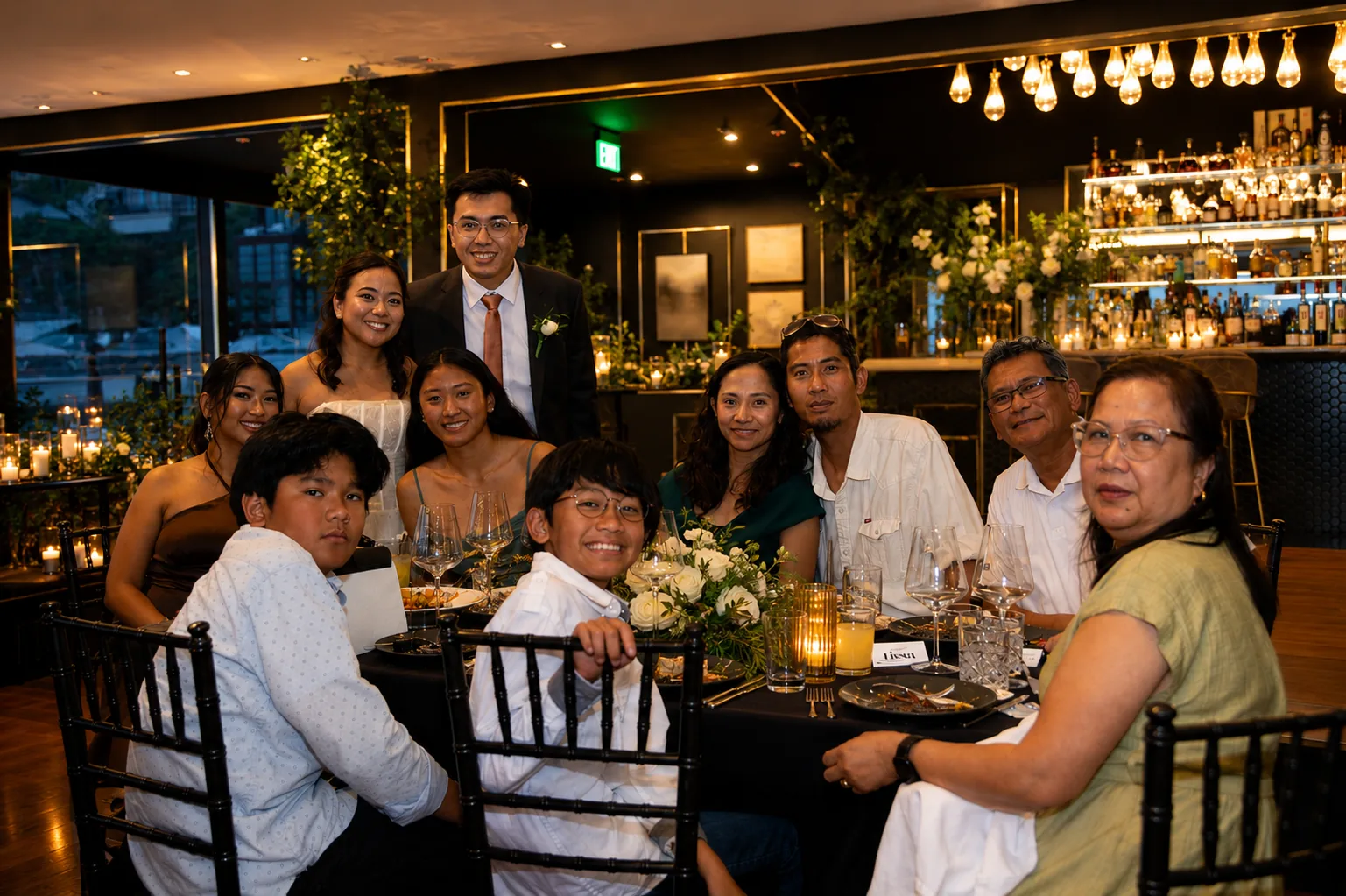
You can see many disciplines meeting in an event portfolio, but a photograph cannot show every conversation that made the result possible. The contribution might be a technical correction, a better question or a quiet warning delivered early enough to matter.
I love the dramatic part of an event. I also love the person who can explain precisely why it worked. There is a particular joy in meeting someone whose care makes you notice a whole world inside a task you had barely considered. I intend to keep making time for those people.
Explore all planning guides → Sausalito celebrations →
Plan With ERIA
Ready to bring this to life?
Tell us what you are planning. Our team will help you shape the experience from first idea to final detail.
Start a Conversation