Event Planning · November 16, 2026 · ERIA Events · 7 min read
A beautiful private dining room should make it easy to be together. You should hear the person across the table, see the speaker without rearranging your chair, and reach the restroom without asking half the room to stand. Those details rarely dominate a venue photograph. They determine how the evening feels.
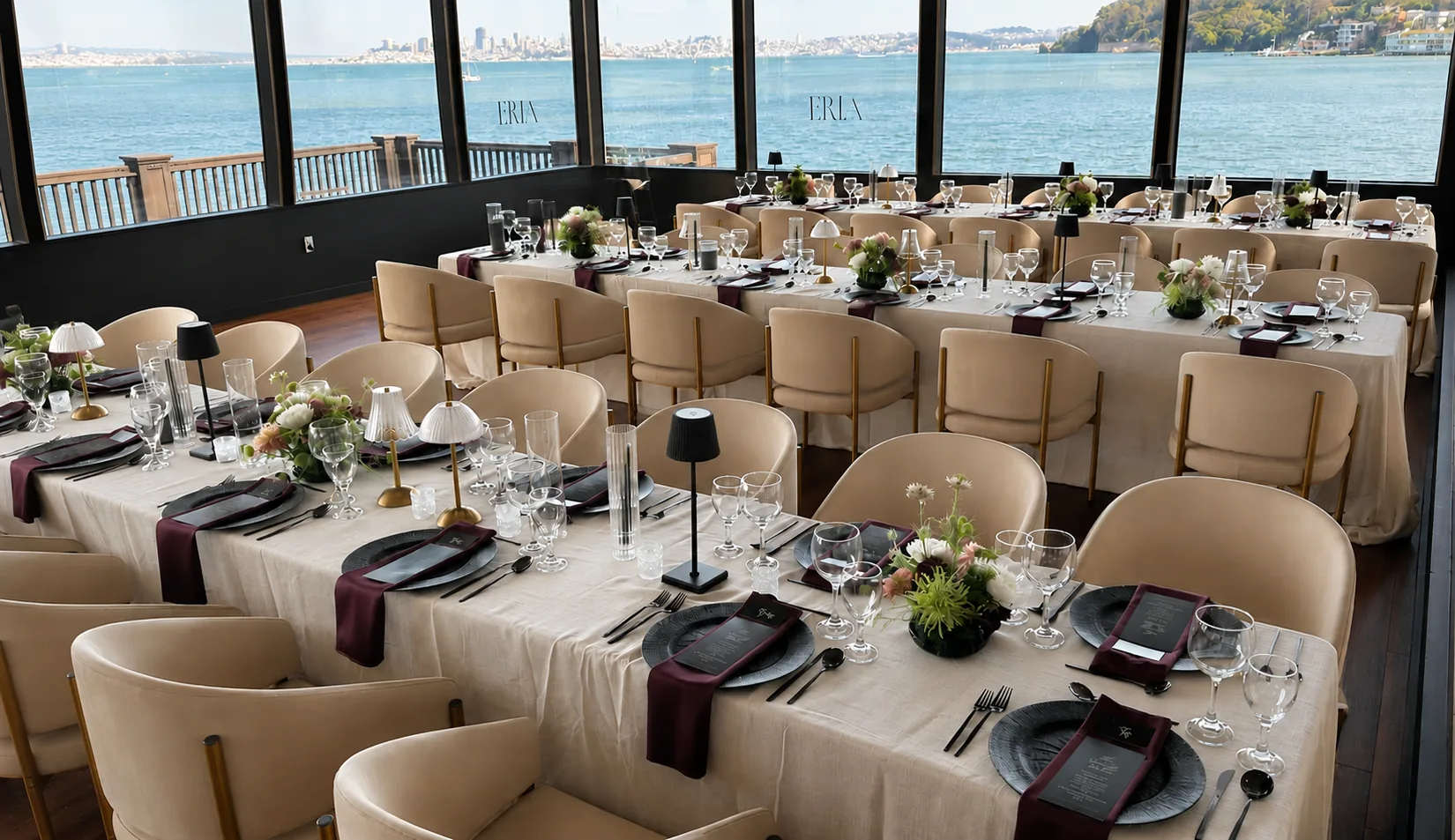
At ERIA Sausalito, on the waterfront at 562 Bridgeway, dinner can be shaped around the occasion rather than a standard restaurant reservation. ERIA operates private event spaces, with the menu, service and room arrangement confirmed for each booking. Upstairs can seat 100 guests, subject to the layout and current venue approvals. That number is a starting point for planning. Your floor plan still needs to accommodate everything that happens around the meal.
Begin with the conversations you want
A family birthday and an investor dinner may have the same guest count and need completely different rooms. The birthday might benefit from several comfortable conversation groups. The investor dinner might need a clear view of a host who will introduce each guest and guide the discussion.
Before choosing a table shape, answer three questions: should guests speak mainly with their immediate neighbors, should the whole room follow one conversation, and should people move between groups? Each answer has consequences. A single long table looks cohesive, but someone at one end will not automatically hear a quiet speaker at the other. Several tables give guests smaller circles, but can separate people you hoped would meet.
Write down the social purpose in one sentence. “We want both families to get to know one another over dinner” is more useful than “We want an elegant layout.” The room can then be designed to support that purpose.
Understand what each table arrangement asks of guests
A long table creates a shared visual moment
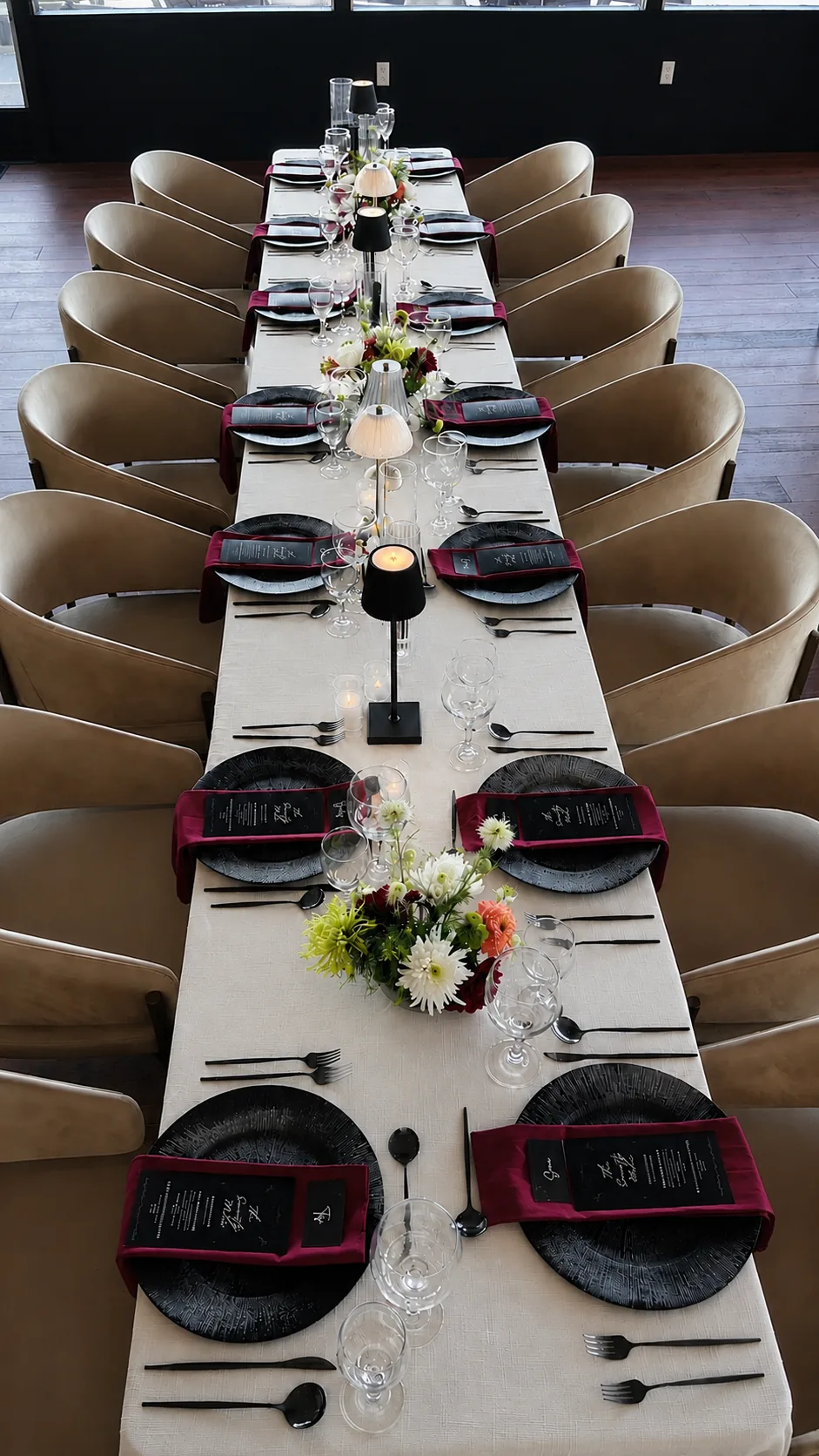
A long table can feel generous and celebratory. Everyone is part of the same arrangement, and a continuous line of candles or flowers creates a strong impression. It works especially well when the dinner is about being together rather than giving everyone equal speaking time.
Its limitations are practical. People mostly speak to those immediately beside or opposite them. Place settings, glasses, flowers and serving platters compete for the same surface. If you want family-style food, plan the table around the dishes that will actually arrive. A photograph of an empty table cannot tell you whether dinner will fit.
Several tables support smaller conversations
Separate tables can make an event feel sociable without expecting the entire group to share one discussion. They also give the host more control over introductions: a few familiar people at each table can help welcome guests who know nobody else.
The risk is isolation. If the guest of honor stays at one table throughout dinner, other tables may feel distant from the celebration. Build in a welcome period, a short visit to each table, or a change of location for dessert. Movement needs a purpose and a clear route.
A mixed arrangement needs a clear reason
Dining tables, lounge seating and standing tables can work together when different parts of the evening have distinct jobs. They become less successful when guests cannot tell where they are supposed to eat. If dinner is seated, make sure every guest has an assigned or clearly available dining place. A sofa is a lovely place for a conversation, but an awkward substitute for a proper meal setting.
Protect the paths before adding decoration
Ask the venue team to draw the guest route and the service route on the same plan. Guests need to move from the entrance to their seats, the bar and the restrooms. Servers need to carry plates, clear glassware and reach each table. Those movements should remain possible when chairs are occupied, not just when they are pushed in.
Discuss mobility needs with the venue before finalizing the arrangement. Confirm the actual arrival route, any level changes, restroom access and the space required around a guest's seat. Do not infer accessibility from an attractive room photograph or a floor-plan label.
Then place the decorative elements. A welcome sign should not become a bottleneck. A gift table should not block the route to dinner. A floral installation should not turn the only practical service passage into an obstacle course. The room should remain easy to use when the event is at its busiest.
Give speeches a place in the plan
Speeches change the geometry of a dinner. A room that feels intimate during conversation may become frustrating if half the guests face away from the speaker.
Choose the speaking position before approving the seating chart. Check it from several seats, particularly those near the edges of the room. Consider where a photographer will stand and whether someone moving to the microphone will cross the serving route. Confirm microphone availability and any equipment charges in the proposal.
Coordinate speeches with the catering team. The first course arriving is generally a poor moment for the room to go quiet: servers are moving, plates are being placed, and guests are deciding whether it is polite to begin. A clear pause in service gives the speaker attention and the kitchen a predictable schedule.
A worked example: a family anniversary dinner
Imagine a hypothetical dinner for 36 guests, with three generations, a short slideshow and two toasts. The hosts initially picture one long table. Their real priority, however, is that grandparents can comfortably hear the people around them and everyone can see the screen.
A useful planning exercise would compare that long table with several smaller tables facing a common presentation area. The host could review a seat-level view of the screen, ask how plated service reaches each table, and reserve an arrival period for mingling before guests sit down. The slideshow could happen after the first course is cleared, with the main course served afterward.
This is an illustrative planning scenario, not a statement about a particular approved ERIA floor plan. Its value is the method: test the arrangement against the actual evening before committing to its appearance.
What to bring to a layout conversation
Send the venue a working guest count, the service style you are considering, and a list of everything that needs floor or table space. Include a cake display, gifts, a screen, a musician, a photographer's backdrop or any activity you are considering. A small addition can change the best arrangement.
For more help with the meal itself, explore planning a private dinner for 30 to 40 guests. When comparing costs, use the same layout and service brief for every proposal so the numbers describe comparable experiences.
Frequently asked questions
Is one long table better than round tables?
Neither is universally better. A long table creates a shared visual setting; smaller tables create more manageable conversation groups. Choose according to the guest relationships, menu and speaking program.
Can the maximum seated capacity include a dance floor?
Do not assume it does. A dance floor, entertainment or a presentation area uses space. Ask for a plan showing your complete event and have the venue confirm the appropriate guest count.
Should I finish the seating chart before choosing the layout?
Start with important relationships and access needs, then select a workable layout. Assign final seats once the table arrangement and attendance are settled. That avoids rebuilding the entire chart around a plan that cannot work.
Can the room change during the evening?
A change may be possible, but it requires an agreed location for guests, staff to move items and enough time. Confirm the sequence, labor and any additional cost before making a room change part of the program.
Plan the dinner from the guest's seat
Explore private dining at ERIA Sausalito, then send your date, guest count and dinner brief. Include the conversations, speeches and moments that matter most. Those details are what turn a room arrangement into an evening people enjoy.
Explore all planning guides → Sausalito celebrations →
Plan With ERIA
Ready to bring this to life?
Tell us what you are planning. Our team will help you shape the experience from first idea to final detail.
Start a Conversation