Event Planning · November 16, 2026 · ERIA Events · 7 min read
A restaurant-style private event has a particular appeal: a considered menu, attentive service and a table that feels worth dressing for. The host gets to enjoy the dinner rather than spend it directing deliveries. Creating that experience starts with the relationship between the menu, the room and the people serving it.
ERIA Sausalito, on the waterfront at 562 Bridgeway, is a private event setting rather than a walk-in restaurant. Both Sausalito floors have separate commercial kitchens. Catering arrangements, equipment, service and charges are confirmed for the event. That flexibility makes it possible to shape a dinner around the occasion, provided the practical decisions happen before anyone falls in love with a menu.
Write a dinner brief before requesting dishes
Tell the caterer what kind of evening you are hosting. A birthday with speeches, a client dinner with a presentation and a relaxed welcome party place different demands on the kitchen. The same food can feel thoughtful at one event and poorly timed at another.
Your first brief should include the working guest count, intended meal time, event duration, any speeches or activities, dietary requirements already known and the overall budget available for food and service. Say whether guests should stay seated for most of the meal or move around. Share the room plan if one exists.
Ask for a proposal that separates the menu from staffing, rentals and other charges. A per-person food price is useful, but it does not necessarily describe the cost of delivering a fully served dinner. Consult ERIA's pricing information alongside the event proposal rather than treating either as a substitute for an agreed scope.
Plated service: structure and a clear sense of occasion
Plated service gives each guest a prepared dish and creates a natural rhythm through the meal. It can suit an evening when guests should remain seated, conversation is central, or the host wants clearly timed courses around a short program.
The planning happens before service. If guests choose between main courses, the caterer needs accurate selections and a reliable way to identify each person's meal. A seating chart, place-card notation and the catering team's own system must agree. Someone should own updates when a guest changes seats or a late RSVP arrives.
Discuss how the kitchen plans to serve the room. “Dinner at seven” could mean the first plates leave the kitchen at seven or that everyone should be eating by then. Ask how long service is expected to take and where speeches can fit without interrupting it. Menus should be designed for the actual guest count and facilities, not simply copied from a small restaurant tasting.
Family-style service: shared food with a space requirement
Family-style dining can make a table feel generous. Guests pass dishes, help one another and begin talking about the food. It can be a lovely choice for a celebration whose energy is warm and informal while the presentation remains polished.
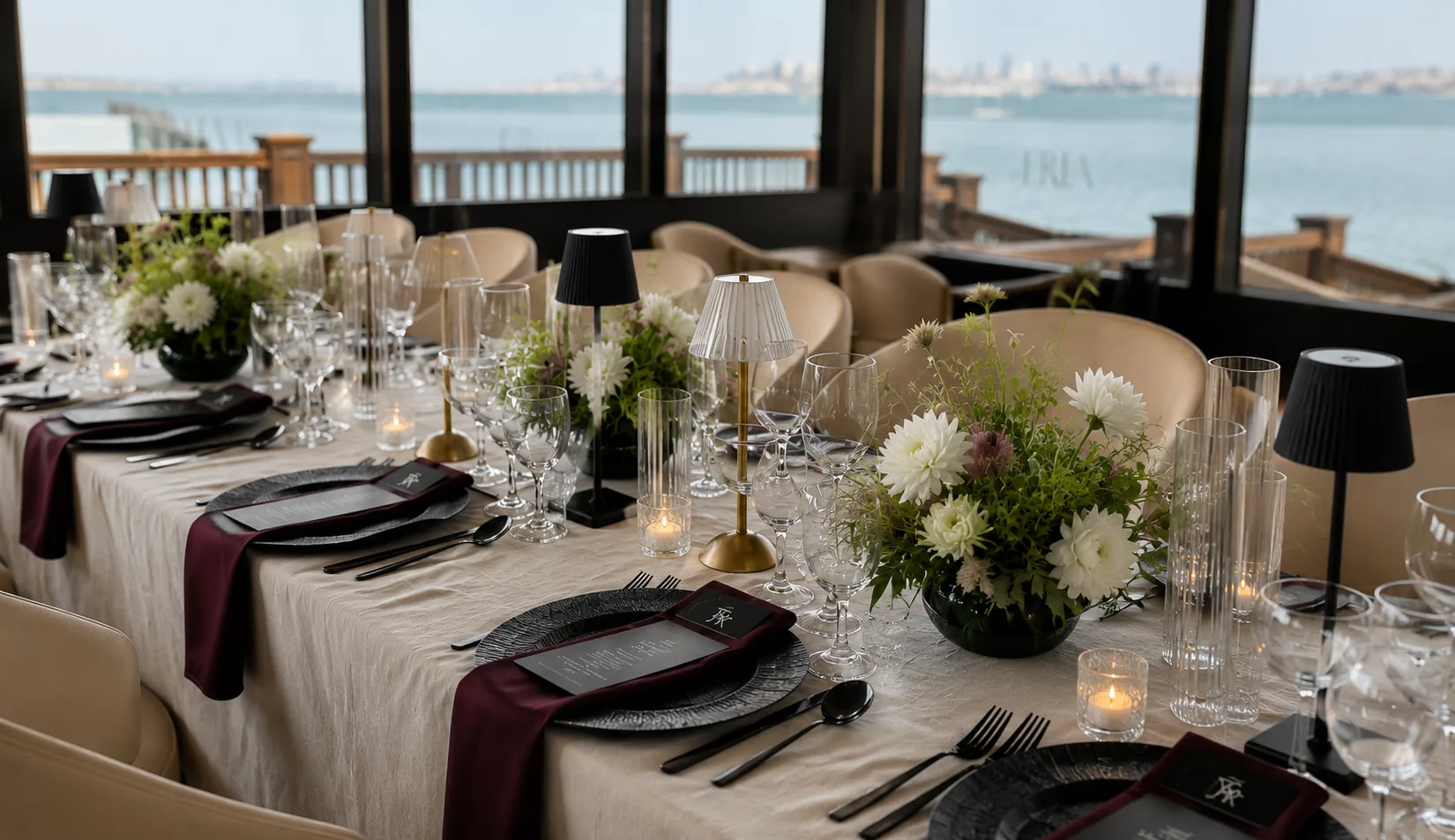
The table must have room for the menu. Serving platters, utensils, water, wine, place settings and flowers all need space. Ask the caterer to describe the number and size of dishes arriving at once. Then review the table design with those dishes included.
Shared service also needs a replenishment plan. Who notices an empty platter? Where do used serving utensils go? How will a guest with a dietary restriction receive an appropriate meal without having to explain it repeatedly? Some meals may need to be served individually even when the rest of the table shares. The caterer should confirm what can be accommodated and how it will be handled.
Buffets and stations: movement is part of the meal
Buffets and stations let guests choose what they want and can encourage movement. They work best when the room has been planned for people queuing, carrying plates and returning to seats.
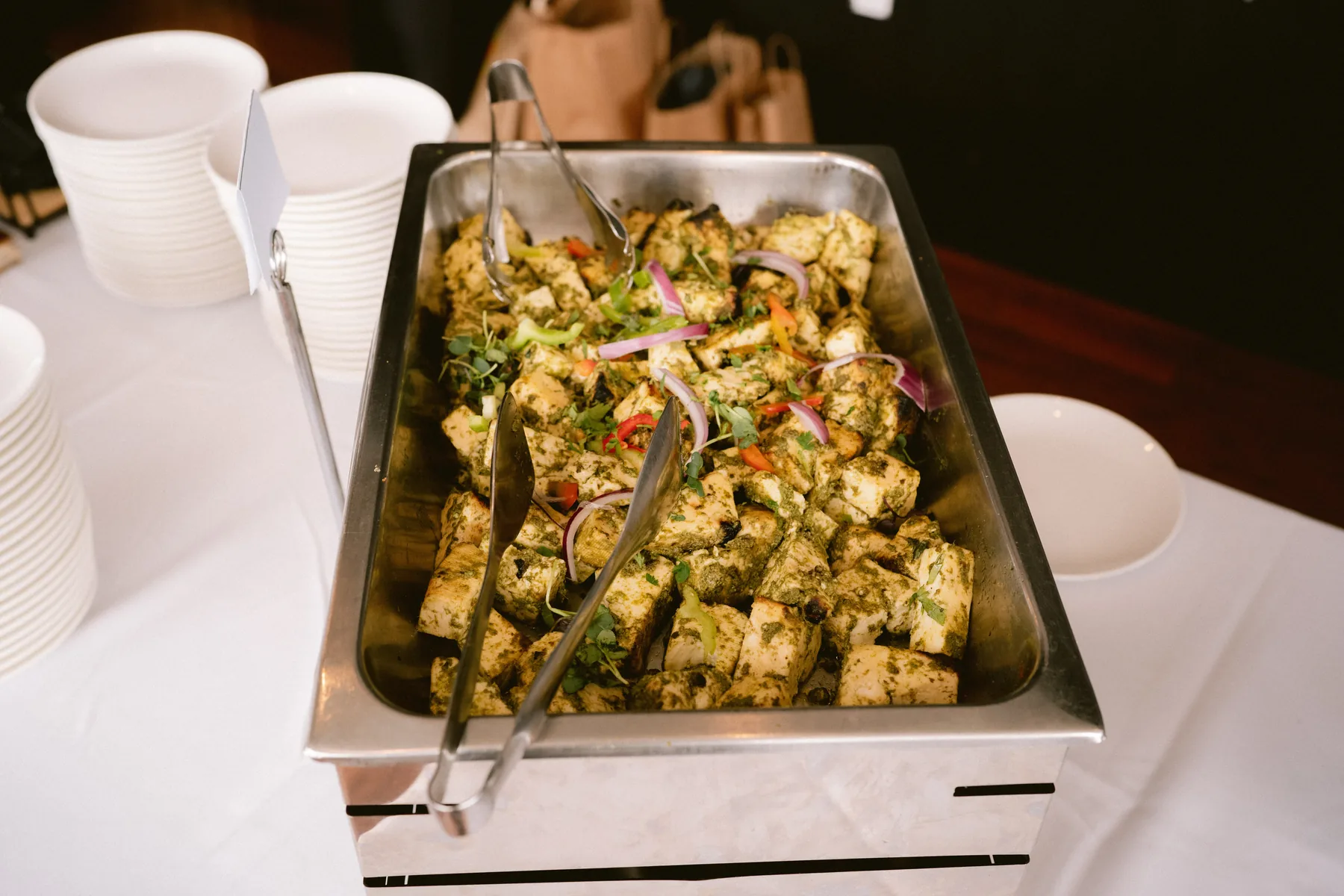
Food displays need more than a convenient wall. Confirm access to power if required, the catering team's setup needs, replenishment routes and the space around the station. A queue should not cut across the entrance, bar or main route through the room. Ask how guests will be invited to approach so the whole group does not arrive at once.
Decide what service still happens at the tables. Guests may collect their food, but someone still needs to clear plates, refresh water and maintain the room. A buffet does not automatically mean fewer responsibilities or a lower total cost. Compare the complete staffing and rental requirements before choosing it for budget reasons.
Dietary requests need a process
Collect dietary information with the RSVP and give guests a clear place to describe their requirements. Do not assume the person making the reservation knows every guest's needs. Provide the caterer with the information by the agreed deadline and ask what clarification is required.
Keep the final list connected to the seating plan where applicable. Identify a single event contact who can resolve a question with the catering lead discreetly. Menu labels can help guests make choices, but they do not replace a direct conversation about ingredients, preparation and possible cross-contact. Never promise an allergy-safe meal on a caterer's behalf.
The hospitality goal is simple: a guest should know whom to ask and should not be left hoping the correct meal finds them. Confirm the process, then let the professionals responsible for preparing the food explain what they can provide.
Put every service responsibility in writing
A polished dinner can unravel when two suppliers each believe the other is bringing the same item. Confirm responsibility for plates, cutlery, glassware, linen, serving pieces, equipment, ice and waste removal. Discuss who resets the room and who completes kitchen cleanup.
At ERIA, outside catering requires approval and a certificate of insurance. Kitchen access and related charges belong in the event proposal. Read the outside catering guide before assuming that a commercial kitchen includes every appliance, utensil or service item your menu needs.
Also establish the arrival, setup, service, clearing and departure windows. A vendor's working hours extend beyond the hours your guests are eating. Ask whether the quote includes the full period and how changes will be handled.
A hypothetical menu planning exercise
Consider a hypothetical 50-person welcome dinner with a short toast and several dietary requests. The hosts want guests to meet across two families and initially choose food stations. On reviewing the room, they realize they would prefer everyone seated together for the toast and first course.
One option to discuss with the caterer is a seated starter, a main course served in an agreed format, then a separate dessert moment that encourages mingling. Another is a fully plated dinner with a longer welcome reception. Neither is a default package or guaranteed arrangement. The useful question is which sequence best serves the social purpose within the room, staffing and budget available.
Frequently asked questions
Is plated service always more expensive?
No universal rule settles that comparison. Menu ingredients, staffing, rentals, preparation and service duration all affect the proposal. Ask for comparable full-service quotes using the same guest count and event hours.
Can we combine service styles?
Ask the venue and caterer to assess the complete sequence. Different formats can work together, but each transition needs equipment, labor and space. Confirm those requirements before approving the menu.
Does a kitchen mean the venue provides catering?
No. Kitchen facilities and catering service are separate parts of an event. Confirm the chef or caterer, the agreed kitchen access, the equipment available and exactly what is included in your booking.
When should dietary requirements be finalized?
Use the deadline agreed with your caterer and build it into your RSVP process. Tell the catering lead promptly about later changes so they can explain what is possible.
Build the meal around the evening
Explore restaurant-style private events at ERIA Sausalito. When you inquire, share your date, estimated attendance, preferred service style and overall food-and-service budget. A clear brief makes the first proposal far more useful.
Explore all planning guides → Sausalito celebrations →
Plan With ERIA
Ready to bring this to life?
Tell us what you are planning. Our team will help you shape the experience from first idea to final detail.
Start a Conversation