Event Planning · November 16, 2026 · ERIA Events · 8 min read
A bar or bat mitzvah party brings together people who may experience the same room very differently. One guest is looking forward to dancing with friends, another wants to reconnect with relatives, and someone attending without a familiar group may be wondering where to begin. Age offers only part of that picture.
A thoughtful party gives guests several comfortable ways to join in. It also gives the family clear responsibility for supervision, arrivals and departures, so those practical details support the celebration instead of competing with it.
When planning a bar or bat mitzvah celebration with ERIA, describe how you want guests to spend their time. A useful brief includes the young person’s interests, the mix of guests and the family’s expectations for the evening. That information helps shape a room where different experiences can coexist.
Ask the young person what would feel like their party
Begin with a conversation that goes beyond a theme. Who are they excited to have there? Would they enjoy a big entrance? Do they want to dance, play games, spend time at a photo experience or simply be with their friends? What would feel embarrassing or exhausting?
Give them meaningful choices within the family’s budget and practical boundaries. Choosing between two activities they actually like is more useful than being asked to approve a long plan that has already been purchased.
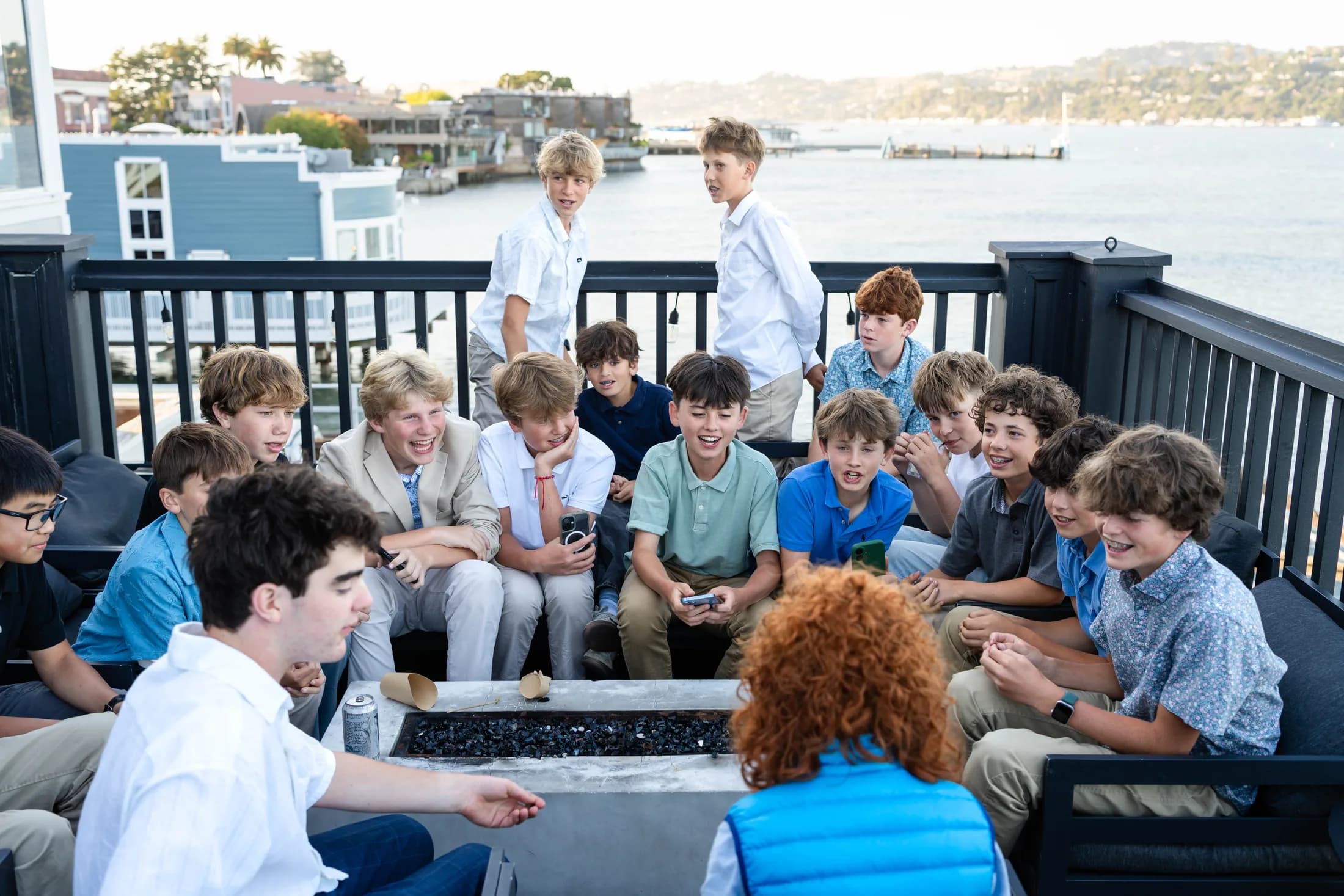
Avoid treating all teen guests as one personality. Some will love being at the center of a game. Others may prefer conversation, watching a performance or joining a small activity. A celebration feels welcoming when participation does not depend on being outgoing.
The adults’ preferences deserve the same care. Some relatives will be first on the dance floor; some will want a place where they can hear one another. Plan for those differences without assigning people a role based on their age.
Create connected areas with clear purposes
Think about the room as a series of experiences that guests can understand at a glance. There may be dining, dancing, a photo area and a place for quieter conversation. The exact arrangement depends on the approved space and floor plan.
Keep those areas connected enough that the party still feels shared. A quieter seating area should let guests remain part of the occasion, with a clear view or easy route to the main celebration where possible. It should not feel like a place to send anyone who is finished dancing.
Review the plan with the venue and production team. Consider how guests will move when chairs are pulled out, people are queuing for an activity and staff are carrying food. Keep entrances, exits and service routes clear through the agreed layout.
Use the venue comparison to begin the discussion, then assess the actual spaces against the planned activities. A maximum guest figure alone does not show whether a room supports dining, dancing and several installations at the same time.
Choose activities with a welcoming entry point
An activity works better when guests can understand it quickly and join without a lengthy explanation. Discuss the format with the entertainment provider, including how someone enters, how long a turn lasts and what happens while others wait.
A photo experience can offer an easy shared moment when its position does not create a bottleneck. A short hosted game may bring a group together if participation is voluntary and the content suits the family. A creative station can work when materials, staffing and cleanup are properly arranged with the venue.
Choose activities that fit the young person’s interests rather than assembling a catalogue of popular options. One well-run experience can give guests more enjoyment than several unattended setups.
Ask providers how they include guests who do not want to compete or be photographed. Nobody should have to explain a private reason for opting out. An enthusiastic invitation followed by a gracious acceptance of “no, thank you” keeps the mood generous.

Plan sound as part of hospitality
Music and entertainment help establish energy, but conversation needs a place too. Discuss speaker positioning, the proposed quieter area and the permitted sound arrangements with the venue and entertainment team.
Check whether guests seated for dinner will be able to hear one another. Consider how announcements will reach people without requiring the entire event to remain at announcement volume. Assign someone who can request an adjustment during the party.
If there are speeches or family moments, arrange a clear position for the speaker and usable sightlines for seated guests. The mitzvah party timeline guide explains how to place those moments around dining and dancing so guests know when to gather and when they can circulate freely.
Make supervision a named responsibility
Venue staff, caterers, DJs and photographers have their own event roles. Do not assume that their presence provides supervision for minors.
The family should designate responsible adults and explain their duties before the party. Decide who welcomes younger guests, who remains aware of the activity areas and who handles a concern or an unexpected departure. Share those names with the event lead.
Clarify the event boundaries. Guests should know which areas are part of the booking and which are not available. The designated adults need to understand the approved routes and any site-specific instructions from the venue.
A simple written plan is useful. It might identify the supervising adults, the event lead, the person handling pickup questions and the agreed process if a guest cannot locate their caregiver. Keep the plan practical and give the relevant adults a reliable way to contact one another.
Make arrivals easy to recognize
Collect the information needed to identify guests and communicate with parents or caregivers appropriately. Tell families whether a teen is attending with an adult or being dropped off, and confirm the arrangements before the event.
Send the correct address, entrance, start time and host contact. ERIA’s getting-to-our-space guide can help with directions, while the invitation should explain the event’s specific check-in or welcome process. Confirm current drop-off arrangements with the venue instead of assuming vehicles can wait outside.
Place a designated adult at the agreed arrival point. That person can welcome guests, direct them into the party and handle questions without making the young person being celebrated manage a queue of arriving friends.
Avoid displaying private contact details on a public welcome sheet. Keep guest information accessible to the adults who need it for the event.
Plan pickup before the final song
Tell caregivers the collection time, location and contact person in advance. Agree on how authorized pickup or another departure arrangement will be confirmed, and communicate that process to the supervising adults.
As the party winds down, keep a designated adult responsible for the remaining younger guests. That role should continue while belongings are gathered and vendors begin their agreed removal work. The event is not over for the host merely because the entertainment has finished.
Leave time for goodbyes and collection within the guest schedule. A clear ending is kinder than a sudden announcement that everyone must leave immediately. Confirm any expectations around guests who are delayed with the venue and the family’s supervising team before the day.
Discuss photographs and sharing in advance
A party photographer and a photo activity may create images that families are comfortable keeping privately but do not want posted publicly. Establish the event’s approach to photography, vendor use and social sharing in advance.
Give guests or caregivers a way to communicate preferences to the host. Pass necessary instructions to the photography and entertainment teams, and choose a practical way for them to follow those instructions without calling attention to a guest.
Let the young person approve personal material used in slideshows or displays. A celebration can honor childhood without making private photographs or stories part of a surprise presentation.
Teen and adult guest questions
Should teens and adults sit in separate groups?
That depends on the guests and the meal. Separate tables can work when they support comfort and supervision; mixed seating may suit family groups. Decide intentionally rather than assuming everyone wants the same arrangement.
Do we need an activity for every guest?
No. Good food, conversation and time together are part of the party. Offer a few considered options and make participation comfortable rather than compulsory.
Does the venue supervise younger guests?
The family should designate responsible adults and confirm any separately arranged supervision service. Venue and hospitality staff should not be treated as an automatic child care arrangement.
What should we discuss with ERIA first?
Share the guest mix, intended activities, meal style and arrival and pickup expectations. Contact the team so the layout and event proposal can reflect those practical needs.
Explore all planning guides → Sausalito celebrations →
Plan With ERIA
Ready to bring this to life?
Tell us what you are planning. Our team will help you shape the experience from first idea to final detail.
Start a Conversation