Event Planning · November 16, 2026 · ERIA Events · 8 min read
The last working session ends, laptops close, and the group heads to dinner. On the schedule, the transition looks effortless. In practice, someone is still debating a decision, someone else needs ten minutes alone, and the organizer is answering messages about tomorrow while trying to welcome everyone to the table.
A leadership dinner needs its own plan. It should acknowledge the work people have done, give them a comfortable change of pace, and allow relationships to develop outside the roles they occupied all day. That requires more than moving the meeting into a room with better lighting.
For a team considering a private dinner in Sausalito, start by deciding what the evening should feel like at its end. A group that has spent the day making difficult decisions may need a very different dinner from a team celebrating a clear milestone.
Decide whether the work is finished
The most useful planning question is simple: is dinner a continuation of the offsite, or is it the social close? Both can work, but the invitation and the schedule should say which one you mean.
If a structured conversation will continue over dinner, name the topic and set a boundary around it. For example, the host might invite each person to share one observation from the day before the main course. That is more manageable than announcing an open discussion of every unresolved question after guests sit down.
If the purpose is connection and appreciation, close the working agenda before anyone leaves the meeting. Record decisions, owners, and open items. A clear written record reduces the pressure to finish every conversation at the table. It also prevents one person’s memory of a dinner exchange from quietly becoming the team’s official decision.
Build an actual transition into the schedule
A five-minute gap is not much of a transition after a long day. Work backward from dinner arrival to allow for personal calls, changing clothes if necessary, gathering belongings, and the agreed travel arrangement. Use current routing information when confirming logistics, rather than promising a fixed journey time in an early invitation.
The transition should have an owner. Someone needs to know whether the last session is running late, when the dining team expects guests, and how any change will be communicated. That person should not have to chase several executives separately to learn whether the group has departed.
If the meeting and dinner use the same venue, confirm whether a room reset is required and where guests can comfortably spend that interval. Do not assume the meeting layout can become a dinner layout while everyone remains seated. A realistic reset is part of the event design, not an inconvenience to conceal.
Match the dinner to the team’s energy
Avoid planning exclusively for the most extroverted member of the group. Some people recover through conversation; others need a quieter start before they can enjoy it. An arrival period with a clear place to sit can accommodate both more naturally than an immediate group activity.
Ask what the day contains. Eight hours of presentations may call for an evening with very little microphone time. A physically active offsite may call for prompt food and a straightforward finish. A day involving sensitive debate may benefit from a warm welcome that acknowledges the effort without reopening the disagreement.
Choose the emotional tone before adding entertainment. A musician, an activity, or a tasting should earn its place by improving the evening for this group. It is possible to overprogram a dinner that people would otherwise enjoy simply because they finally have time to talk.
Seat for connection beyond the organization chart
The senior person does not automatically need the central seat. Think instead about which people have had the least opportunity to connect and where a familiar colleague can make a new participant comfortable.
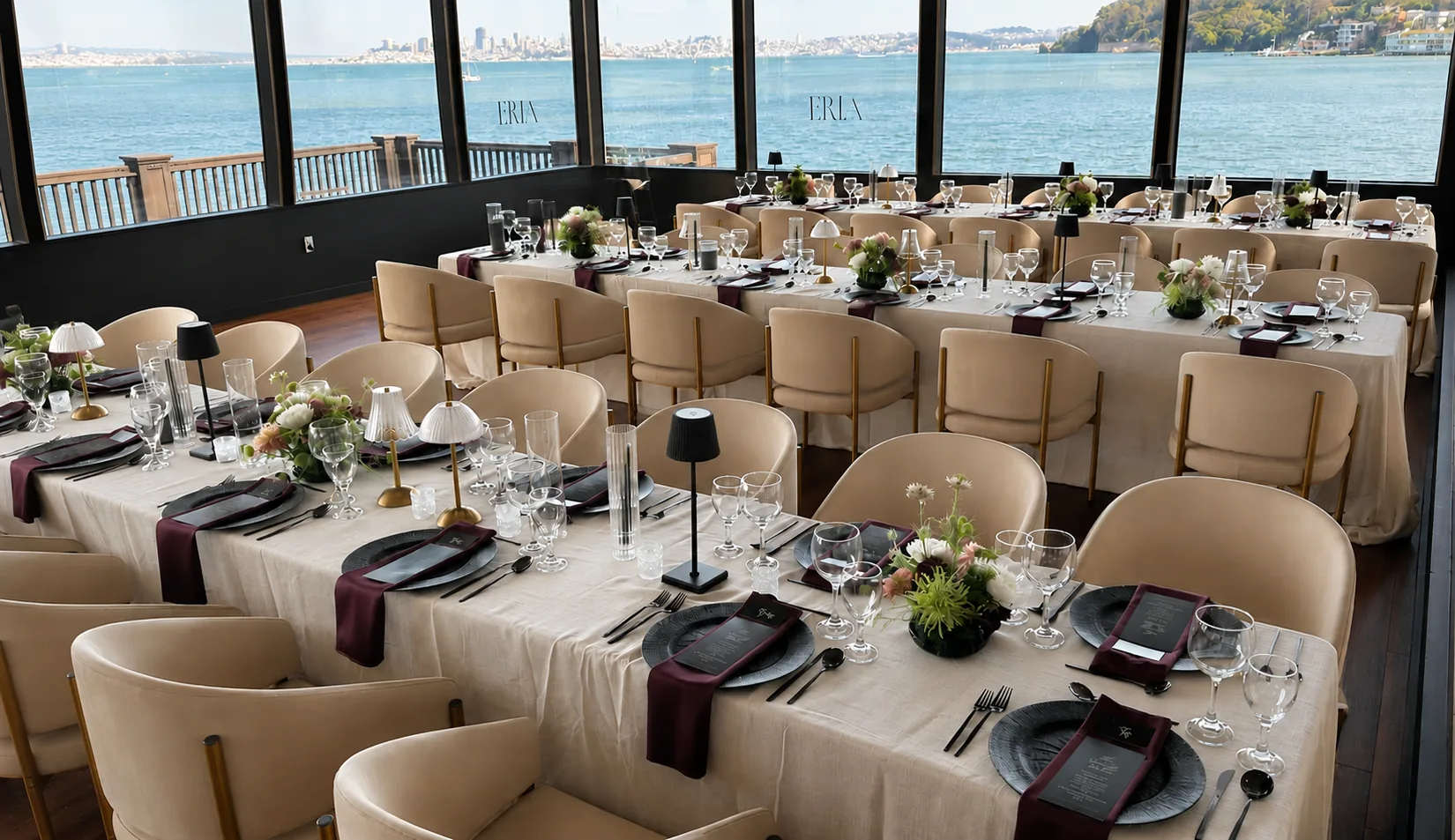
For a hypothetical team of 16, two tables might support smaller conversations, while one table might better suit a short shared reflection. The right choice depends on the room and the purpose. Ask to see the proposed arrangement with service space included, rather than assessing only the number of chairs it accommodates.
Avoid recreating functional departments at separate tables. Equally, do not use dinner to force a difficult relationship into a public reconciliation. Seating can make introductions easier, but it cannot replace a necessary private conversation. The private dining layout guide offers a useful way to assess sightlines, movement, and conversation distances.
Make food decisions before the group gets hungry
After a full day, a complicated ordering process can become the evening’s least welcome task. Confirm whether guests will choose ahead of time, select from a short menu, or share a planned meal. Collect dietary requirements privately before the event and let the catering team explain what it can accommodate.
Think about the first substantial food as carefully as the dinner itself. If the schedule includes a long interval between lunch and the evening meal, discuss an appropriate arrival offering with the team providing food. A welcome drink alone does not solve that gap.
Keep alcohol optional in both the menu and the language. Hosts can describe the available drinks without separating guests into those participating in the evening and those declining something. Confirm nonalcoholic selections, water service, and coffee or tea as part of the same planning conversation.
Give remarks a clear purpose and a short slot
A dinner welcome can do three things well: thank people for their contribution, acknowledge the work completed, and make the evening’s expectations clear. It does not need to recap every presentation.
If recognition belongs in the dinner, make it specific. Thank the people who prepared the offsite, the colleagues who traveled, or the team that completed a meaningful project. Avoid surprise requests for public reflection when a guest may reasonably have thought the formal work was over.
Coordinate the welcome with service. The person speaking should know when to begin, where to stand, and how to finish. Confirm any microphone or presentation requirements in advance. Equipment availability, setup, and support should be documented in the event proposal rather than assumed from a photograph of the room.
Use a schedule with breathing room
Here is an illustrative sequence for a dinner intended as the social close of an offsite. The timings are a planning example, not an ERIA package or operating schedule.
- 5:00 p.m.: Finish the working session and confirm that decisions will be circulated afterward.
- 5:00 to 6:00 p.m.: Allow for the agreed break and travel arrangements.
- 6:00 p.m.: Welcome guests and offer the planned arrival food and drinks.
- 6:30 p.m.: Seat the group and give a brief thank-you.
- 6:40 to 8:15 p.m.: Serve dinner with room for conversation.
- 8:15 p.m.: Close formally so guests know they may leave comfortably.
The practical benefit of an ending is not rigidity. It allows people to make choices. If a later optional gathering is planned, describe it as optional and arrange it separately from the commitments every attendee is expected to meet.
Plan the organizer’s evening too
Give one event contact the authority to handle small timing adjustments within the agreed plan. Share a final guest list, arrival details, food requirements, remarks schedule, and the name of the person who can approve a change in scope or cost.
The internal organizer should be able to sit down. If that person is also responsible for presentations, transport, dietary questions, and checkout, distribute those tasks before the day begins. A leadership dinner is less successful when the person who made it possible spends the entire evening at the edge of the room.
When discussing ERIA Sausalito, explain the working day that comes before the dinner, not only the guest count. That context helps shape an appropriate room, menu service, and timing discussion. Send an inquiry with the date, approximate attendance, preferred format, and the kind of close you want the team to remember.
Frequently asked questions
Should the CEO give a dinner speech?
A short welcome or thank-you may be enough. If there is a substantive announcement, give it a defined place in the schedule and tell the service team. The dinner does not need another keynote simply because the CEO is attending.
Can we use dinner to finish unresolved decisions?
You can, if attendees know that work will continue and the setting supports it. Important decisions are better recorded through the team’s normal process rather than left as informal understandings reached between courses.
Is a private dining room better than an open restaurant?
That depends on privacy needs, discussion format, and the atmosphere you want. Confirm what exclusivity means for the specific booking, including entrances, adjacent activity, and service access. A private label alone does not answer those questions.
How do we keep dinner from feeling compulsory and exhausting?
Make the expectations clear, allow a real break beforehand, and publish an ending time. Keep the formal program proportionate to the day. People can enjoy being together more easily when they understand what is being asked of them.
Explore all planning guides → Sausalito celebrations →
Plan With ERIA
Ready to bring this to life?
Tell us what you are planning. Our team will help you shape the experience from first idea to final detail.
Start a Conversation
