Event Planning · November 16, 2026 · ERIA Events · 7 min read
The morning after a wedding has its own kind of pleasure. The speeches have been made, the formal photographs are finished and people can finally discuss the evening they shared. A farewell brunch can give that conversation a lovely home.
It can also become one event too many if nobody has considered sleep, hotel checkout, travel or who will collect the flowers. The answer is to plan the brunch around the morning people will actually have. A relaxed mood still benefits from precise preparation.
For couples considering ERIA Sausalito, the first question is what the gathering should accomplish. Is it a final meal with immediate family, a chance to see traveling guests again or an open-house farewell? Choose that purpose before choosing a start time.
Make attendance easy to understand
Decide who is invited and whether the brunch is optional. If guests have already committed to a full wedding weekend, a genuinely optional farewell should feel exactly that. Avoid asking people to explain why they need to leave for home.
Invite guests clearly rather than relying on a casual announcement during the reception. They need to know the location, timing, food format and whether an RSVP is required. If the brunch has a narrower guest list than the wedding, communicate invitations privately and consistently.
An RSVP can still be useful for a flexible gathering. Explain whether you need a firm attendance count or an approximate arrival window, then confirm the caterer's final-number deadline. Flexibility for guests should be supported by a plan behind the scenes.
Choose the start time from the guest's morning
Begin with the practical sequence: waking up, getting ready, packing, checking out and traveling to brunch. Add the needs of children and any guests helping return rented clothing or collect personal belongings. A start that looks civilized on paper may still be difficult for someone managing all those tasks.
You do not need to accommodate every departure, but you should understand the main pattern. If most guests have early travel plans, an elaborate late brunch may serve a different group from the one you imagined. A shorter family gathering could be a better fit.
Ask the venue about available timing for the specific date. Brunch is a proposed private-event format, not a promise of ordinary restaurant hours or walk-in service. Access, setup and service times need to be confirmed in the booking.
Decide between a shared start and a flexible window
A seated meal with everyone arriving together can feel intimate and makes the service plan easier to define. It also requires guests to organize their morning around a fixed time. A drop-in brunch offers more flexibility but needs food, staffing and a layout that remain welcoming across the window.
For a hypothetical two-and-a-half-hour gathering, you might allow the first hour for arrivals, maintain the agreed food service through most of the event and reserve the final portion for goodbyes. This is a planning example, not an ERIA package or an assumption about how long particular foods can be held. The caterer should design service and replenishment around the real schedule.
If there is a final moment you want everyone to share, such as thanking close family, tell guests when it will happen. Otherwise, let the brunch be a series of warm conversations rather than trying to gather the room repeatedly.

Choose food for the mood and the service
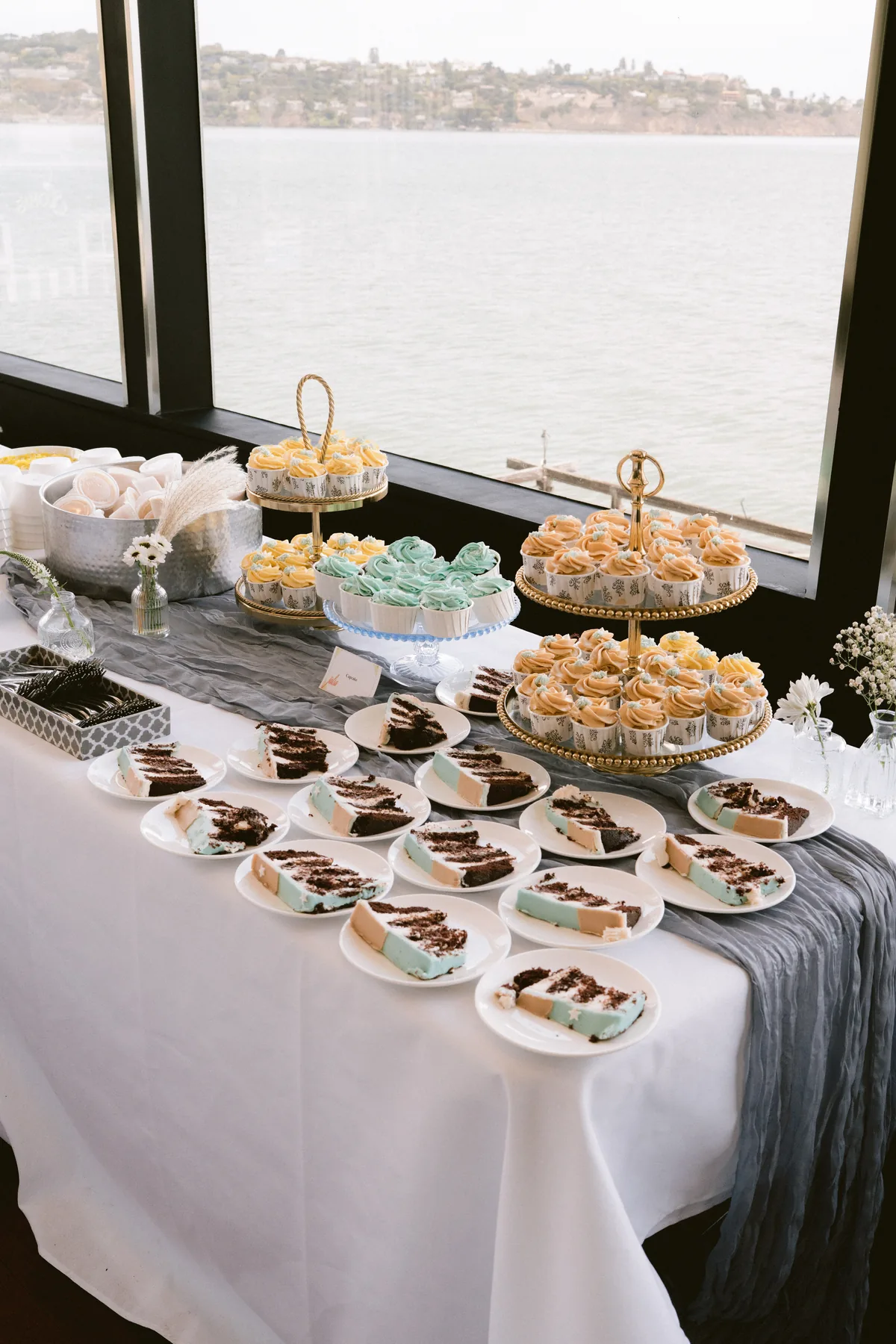
A farewell brunch should be comfortable to eat and satisfying without demanding a lengthy explanation. Consider a balanced menu with something savory, something fresh and a few appealing sweet options. The exact dishes should reflect your tastes and the caterer's ability to deliver them well.
Discuss which items are prepared to order, served in batches or presented at stations. Each choice affects queues, staffing and how long guests wait. A beautiful station is less appealing when it creates the only route between the entrance and the tables.
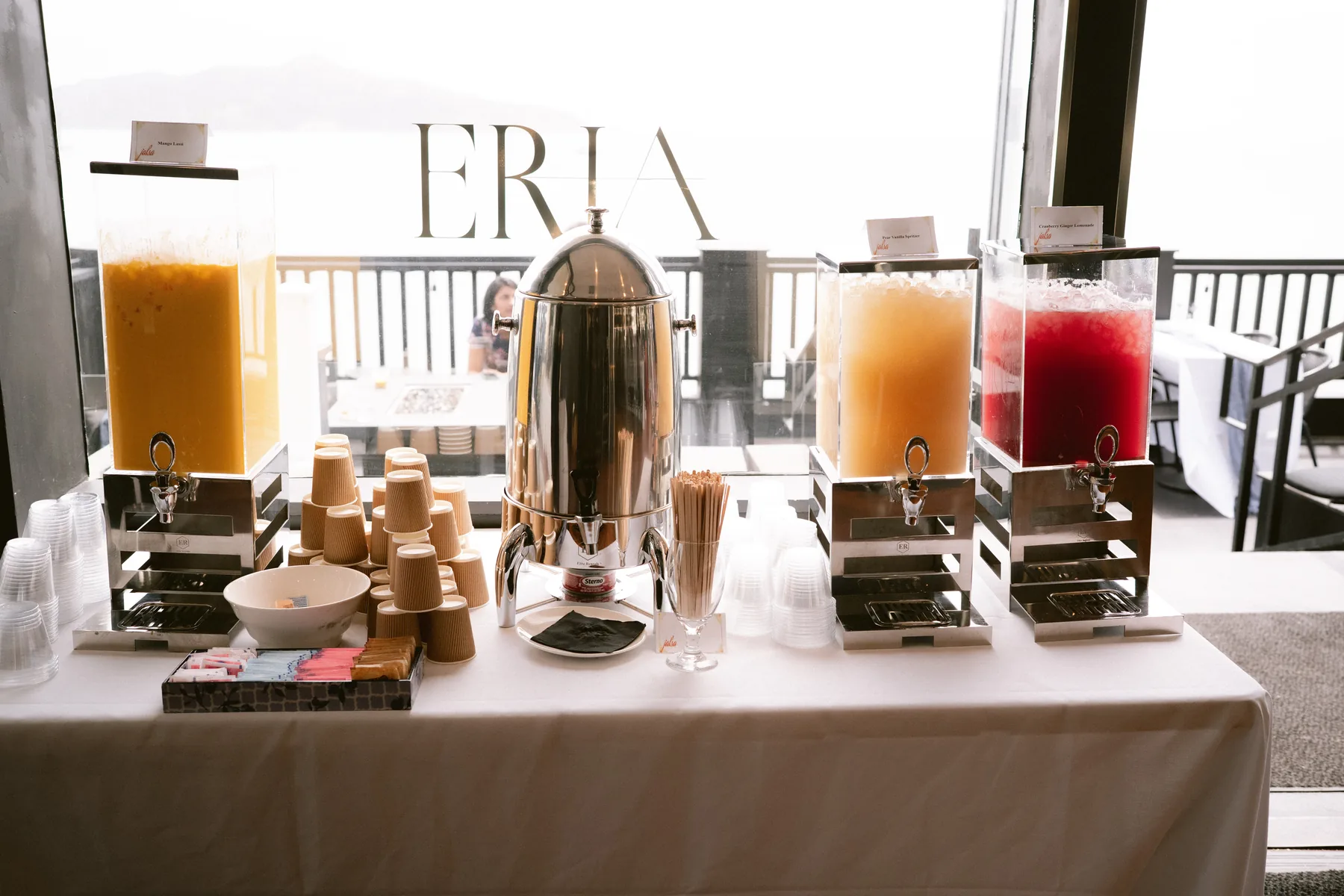
Coffee, tea and nonalcoholic drinks deserve the same attention as food. Confirm quantities, replenishment, cups and service responsibilities. If you are considering alcoholic drinks, confirm the venue's beverage arrangements and make the alternatives feel equally deliberate.
Collect dietary requirements with the RSVP where possible. The brunch team may differ from the wedding caterer, so do not assume that information automatically transfers. Share the relevant details with the correct provider and confirm how individual meals will be handled.
Let the room feel different from the night before
The brunch can have its own lightness without requiring an entirely new design scheme. Clean table settings, comfortable seating and a restrained arrangement of flowers may be all the room needs. Daylight can do much of the work if the chosen room and timing support it.
If you want to reuse wedding flowers or signs, assign responsibility for moving and storing them. Check whether they will remain in suitable condition, whether containers are rented and whether the florist permits the proposed use. Do not build the brunch around objects that must be returned before it begins.
Personal photographs from the wedding should be shared with consent, particularly where children or private moments are involved. You can enjoy the stories of the night without turning brunch into an unedited slideshow.
Keep luggage and departure logistics out of the aisle
Guests leaving directly after brunch may arrive with bags. Ask about storage before suggesting they bring luggage to the venue. Confirm what can be accommodated and who is responsible for belongings; a spare corner is not automatically a secure storage service.
Provide accurate entrance and current access information for the booked space. If transportation has been arranged, share the pickup point and the contact responsible. Guests making their own plans should know the event's end time so they can choose an appropriate departure.
For anyone with mobility needs, confirm the actual route and facilities with ERIA before sending assurances. Small practical decisions can determine whether a guest experiences the brunch as a restful farewell or another obstacle course.
Assign one person to close the weekend
There is often a final collection of wedding tasks waiting after brunch: leftover stationery, gifts, rented accessories and personal decorations. Keep that list separate from the guest experience. The couple should not discover at the table that nobody knows where the card box went.
Name a person who will handle brunch supplier questions and a person who will collect remaining belongings. One person may fill both roles, but the responsibility should be explicit. Give them a short list of what needs to leave, who owns it and where it goes.
If several hosts are paying for different parts of the weekend, confirm brunch billing separately. A wedding agreement does not automatically include a next-day event. Review the space, food, beverages, staffing and applicable charges for the brunch itself.
Protect the point of the gathering
The best farewell is often simple: enough time to hear what your grandmother thought of the ceremony, laugh about a friend's excellent dance-floor commitment and thank the people who traveled. Leave room for those conversations.
If the brunch starts to require more management than enjoyment, simplify one part of the plan. Reduce the program, choose a more straightforward service format or narrow the invitation thoughtfully. The goal is a good final memory of the weekend, not another production to survive.
Post-wedding brunch questions
Do we have to invite every wedding guest?
You can choose an intimate family brunch or a broader farewell. Establish a clear guest-list principle, communicate individual invitations carefully and avoid making excluded guests think the event is open to everyone.
Can people leave before brunch ends?
Yes, if the format allows it. Make departure flexibility clear and schedule any essential shared moment accordingly. Traveling guests should not feel required to stay past a sensible departure time.
Can wedding décor be reused?
Potentially, with the florist's or rental provider's agreement and a plan for transport, storage, condition and return deadlines. Reuse is a logistical decision as well as a design choice.
What should we ask during a venue visit?
Discuss the brunch timing, food service, seating, guest access and any luggage needs. Arrange a site visit with the likely attendance and departure pattern in mind so the plan reflects the morning you want to host.
Explore all planning guides → Sausalito celebrations →
Plan With ERIA
Ready to bring this to life?
Tell us what you are planning. Our team will help you shape the experience from first idea to final detail.
Start a Conversation