Event Planning · November 16, 2026 · ERIA Events · 7 min read
The rehearsal dinner is often the first time the people closest to a couple have an evening together. Some have known one another for years. Others have exchanged a wave on a video call and are now trying to remember the names of six cousins. The most useful thing a host can do is make that first evening feel easy.
That starts with a clear purpose. A rehearsal dinner gives the wedding party and invited family time to eat, settle in and enjoy the anticipation. It can also introduce two circles of people before a much busier day. It does not need its own elaborate production to feel important.
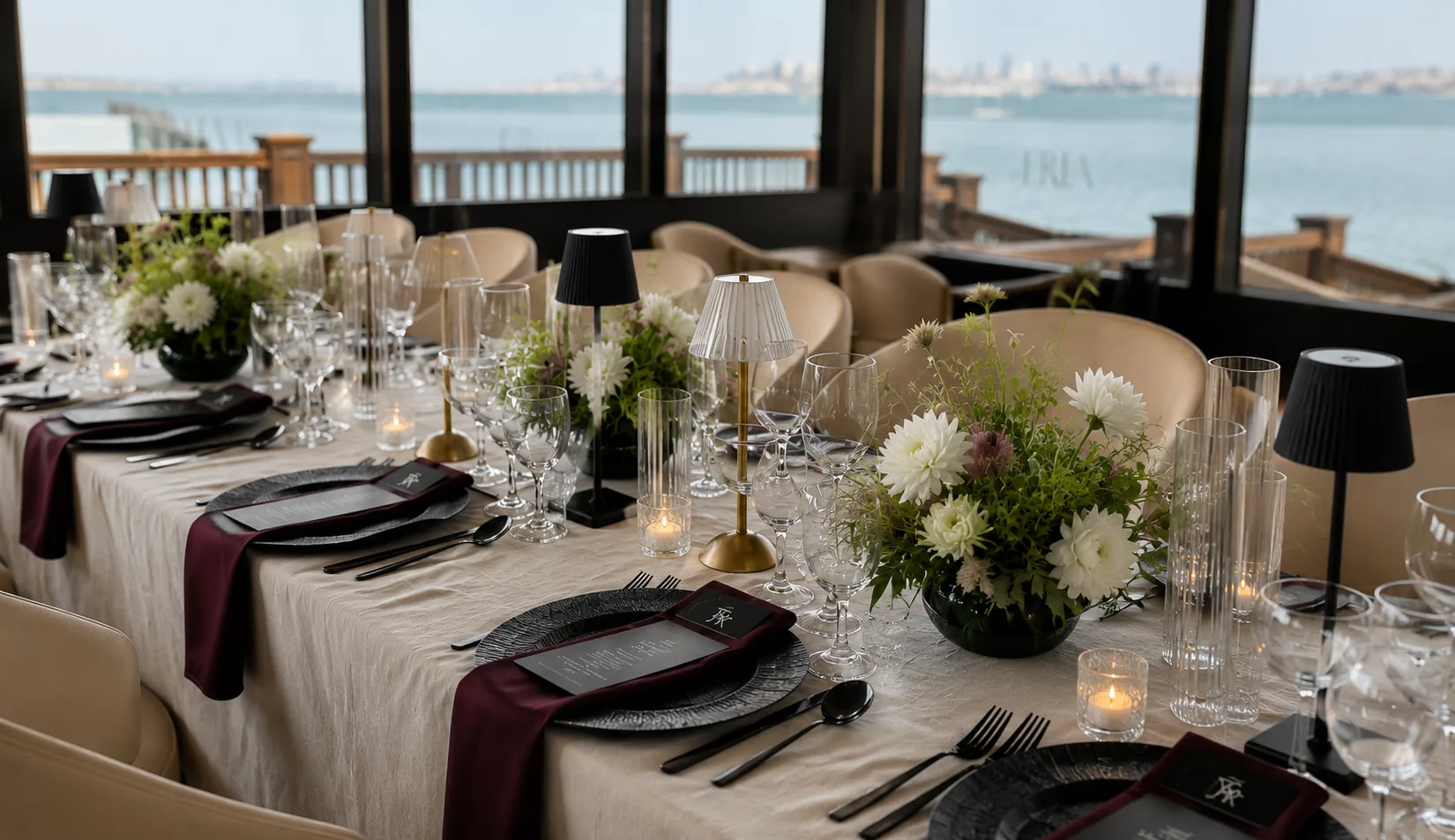
At ERIA Sausalito, a waterfront private dinner can provide the setting. The details worth deciding first are human ones: who is coming, what will help them feel welcome and how much energy everyone will have after travel and rehearsal.
Agree on the invitation boundary together
Before choosing flowers or a menu, the couple and hosts should agree on the guest list. A dinner for immediate family and the wedding party is a different event from a welcome meal for every guest traveling to the wedding. Neither format is more generous by definition. The question is what you can host comfortably and explain clearly.
Write down how partners, children and relatives helping with the wedding fit into the plan. Resolve uncertain invitations privately before anyone sends a group message. If one family is much larger, numerical symmetry may be impossible. Aim for an understandable invitation principle rather than forcing each side to occupy exactly half the room.
If you are having a separate welcome reception, distinguish the two invitations. Guests should understand whether they are invited to dinner, drinks afterward or both. That clarity avoids a remarkably awkward moment at a beautifully set table.
Give the hosts distinct responsibilities
Shared hosting works best when people know what they own. One host might coordinate the guest list, another approve the menu, while a planner handles the venue and suppliers. The couple should have one final contact for decisions that affect the evening.
This does not require a complicated committee. A short note listing the decision, the person responsible and the date it is needed is usually enough. Include who authorizes additional spending and who handles changes on the day. If several relatives are contributing financially, settle their decision-making roles before proposals start arriving.
Choose an evening contact who can answer practical questions without drawing the couple away from their guests. That person needs the final schedule, supplier contacts and authority to make small decisions within an agreed limit. Being the emotional center of a wedding weekend is already a full assignment.
Use seating to create comfortable introductions
A seating plan can quietly solve the evening's hardest problem: how to help unfamiliar people talk without making them feel managed. Start with relationships, hearing and comfort, then think about the visual arrangement.
Give each guest at least one easy connection. That might be someone they already know, someone with a shared interest or a welcoming relative who is good at including people. Mixing families can work beautifully, but separating every guest from their partner in pursuit of maximum mingling may make dinner feel like an exercise.
Consider the whole table. A person who finds background noise difficult may prefer a calmer position with a clear view of the speaker. A parent with a young child may appreciate a seat that makes stepping away straightforward. Ask about needs privately, then confirm the actual room arrangement with the venue.
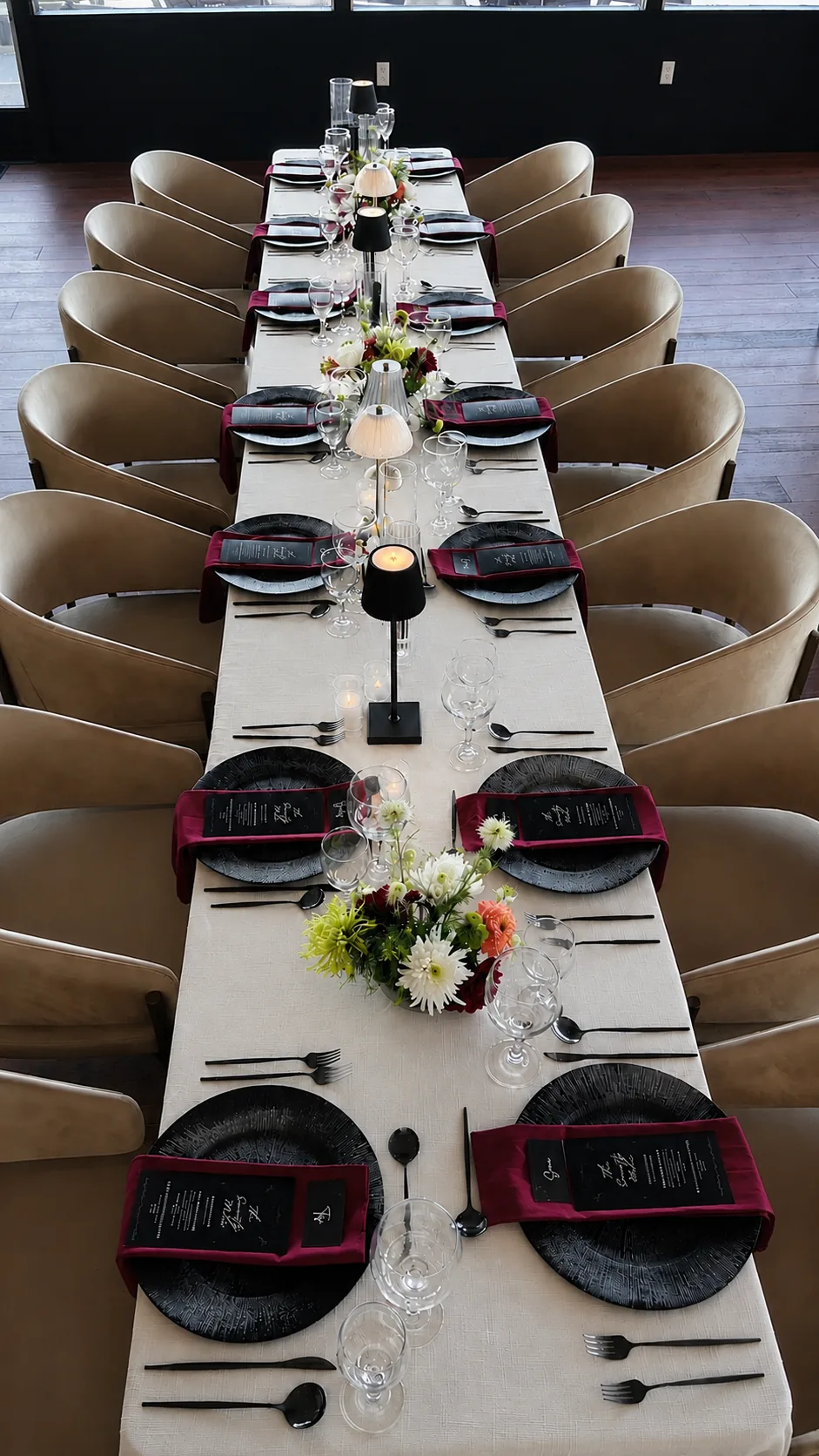
Our private dining room layout guide considers table shapes and service routes. For a rehearsal dinner, the practical question is whether guests can hear, reach their seats and enjoy the people beside them.
Introduce people before asking them to mingle
Hosts can make introductions that offer a real opening. “This is Maya; she and Alex met while studying architecture” gives the next person something to ask. A name followed by a relationship alone can leave both people searching for a second sentence.
You do not need to announce everyone's biography. A few thoughtful introductions during the arrival period are enough to help the room develop its own momentum. Let the couple circulate, but avoid expecting them to personally connect every guest before dinner begins.
If a large family has several shared languages, consider where informal translation would help. A printed welcome can acknowledge the evening's meaning without becoming a long program. Check name spellings and pronunciations with the people concerned; accuracy is a small form of hospitality.
Place speeches where the meal can support them
The rehearsal dinner often attracts more potential speakers than the wedding itself. Decide in advance whether speeches are invited, who will speak and how long the speaking portion will last. An entirely open microphone can be lovely in the right group, but it can also keep dinner waiting while hungry guests become increasingly polite.
Share the speaking plan with the caterer. Agree on a moment when plates can be cleared or service paused without affecting the food. A host should introduce each speaker and know how to move gently to the next part of the evening.
Ask speakers to keep private stories private and to choose memories the couple will enjoy hearing in front of both families. Humor does not need a victim. A short, specific story about someone's generosity can leave a stronger impression than a long account of their most chaotic holiday.
Build the schedule around the actual rehearsal
Work backward from when guests can realistically leave the rehearsal, then account for transportation and a useful arrival buffer. Ask the ceremony coordinator when the rehearsal is expected to finish and who must remain afterward. Avoid promising dinner at a time that depends on every previous step going perfectly.
For a hypothetical dinner with a three-hour guest window, you might reserve roughly the first half-hour for arrivals, the middle two hours for the meal and a few brief speeches, and the final half-hour for dessert and goodbyes. That is an illustrative pacing exercise, not an ERIA package or permitted-hours statement. Your contracted access, meal and travel arrangements determine the real plan.
Make the ending visible. Guests with an early wedding-day assignment should be able to leave without feeling that they have abandoned the party. A warm final thank-you and a reminder of the next day's meeting point can provide a natural close.
Keep the menu welcoming and the logistics quiet
Choose food that can be served well within the available time. Confirm dietary requirements before the final catering deadline, including how individual meals will be identified. For family-style service, check that the table has room for platters as well as flowers and glasses.
A menu does not have to represent every branch of both families to feel personal. One meaningful dish, a short explanation on the menu or a favorite dessert can carry the connection. Make the meal enjoyable first, then add personal detail with restraint.
Before invitations go out, confirm the booked ERIA space, entrance and current access arrangements. Assign someone to handle gifts, leftover personal items and the final supplier questions. These are small jobs until everyone assumes somebody else is doing them.
Rehearsal dinner questions
Must all out-of-town wedding guests be invited?
Choose a guest-list policy you can host thoughtfully and communicate consistently. If the dinner is limited, a separate welcome gathering may offer another way to spend time with traveling guests, provided it fits your budget and energy.
Should the two families be completely mixed at dinner?
Some mixing can encourage connection, but every guest should have a comfortable starting point. Consider partners, existing friendships and practical needs alongside family relationships.
How do we avoid too many speeches?
Invite speakers ahead of time, provide a clear time allowance and appoint one host to introduce them. Tell the catering team where the speaking portion belongs in service.
What information should we send ERIA?
Include your date, estimated attendance, rehearsal timing, meal preferences and whether speeches or a separate welcome reception are planned. Start a rehearsal dinner inquiry with those details so the room and schedule can be considered together.
Explore all planning guides → Sausalito celebrations →
Plan With ERIA
Ready to bring this to life?
Tell us what you are planning. Our team will help you shape the experience from first idea to final detail.
Start a Conversation