Event Planning · November 16, 2026 · ERIA Events · 8 min read
A client dinner has an unusually delicate job. It brings people together for business while asking them to enjoy an evening that should feel less formal than business. Too little structure leaves guests talking only to the colleague they arrived with. Too much structure makes every seat feel like an account assignment.
The answer begins before the menu. Decide which people would enjoy meeting, what they could discuss without a sales presentation, and how the host can make those introductions feel natural. A thoughtful seating plan creates opportunities. It does not need to dictate the conversation that follows.
For a private dinner in Sausalito, the setting can give everyone a welcome change of scene. The more important design work is making sure the evening deserves the time people have set aside for it.
Give the dinner one clear relationship goal
“Deepen relationships” is a reasonable intention, but it does not tell a planner how to arrange the room. A more useful goal describes what should become easier after dinner. Perhaps new clients should know the people who will deliver their project. Perhaps established clients should meet peers facing a similar operational challenge. Perhaps a visiting executive needs time with a small group without turning the gathering into a formal meeting.
Choose one primary goal and let the guest list follow it. If you want candid peer conversation, a table dominated by your own sales team may work against you. If the purpose is to introduce a delivery team, inviting only senior executives misses the people clients will actually work with.
Do not turn the guest list into a ranking of commercial value. Include a reason for each invitation that you would be comfortable saying to the guest. “You and Maya have both built teams across several offices” is an introduction. “We want to move you into our next spending tier” is an internal objective that does not belong at dinner.
Build a guest map before a seating chart
Start with a simple working document containing each guest’s preferred name, organization, role, known connections, and one relevant interest they have willingly shared in a professional context. Add practical seating requirements privately and only where the planning team needs them.
Then mark three kinds of connections:
- People who already know each other and can help an unfamiliar guest settle in.
- People with a useful shared interest who have not met.
- People who should have enough distance for the evening to remain comfortable, including direct competitors when confidentiality is a concern.
Do not assume that two people with the same title will have the most interesting conversation. A product leader and a customer support leader may have more to exchange about a launch than two executives with unrelated businesses. Equally, avoid treating personal details as conversation bait. Guests do not need a host to announce family information or a private career change across the table.
Plan each seat in three directions
A guest’s experience depends on the person to the left, the person to the right, and the people within easy conversation across the table. Check all three relationships before calling the plan complete.
For an illustrative dinner of 18, imagine that six people are from the hosting company and 12 are invited guests. Spreading the hosts around the table gives more guests a point of welcome. Putting all six at one end creates a company table inside the dinner, even if everyone shares the same linen.
Give each guest at least one comfortable connection and one promising new connection. A person attending alone should not be surrounded by three colleagues who share years of inside jokes. A quieter guest does not need to be “fixed” by seating them beside the loudest person in the room. Often the better companion is someone who listens and brings others into a discussion without putting them on the spot.
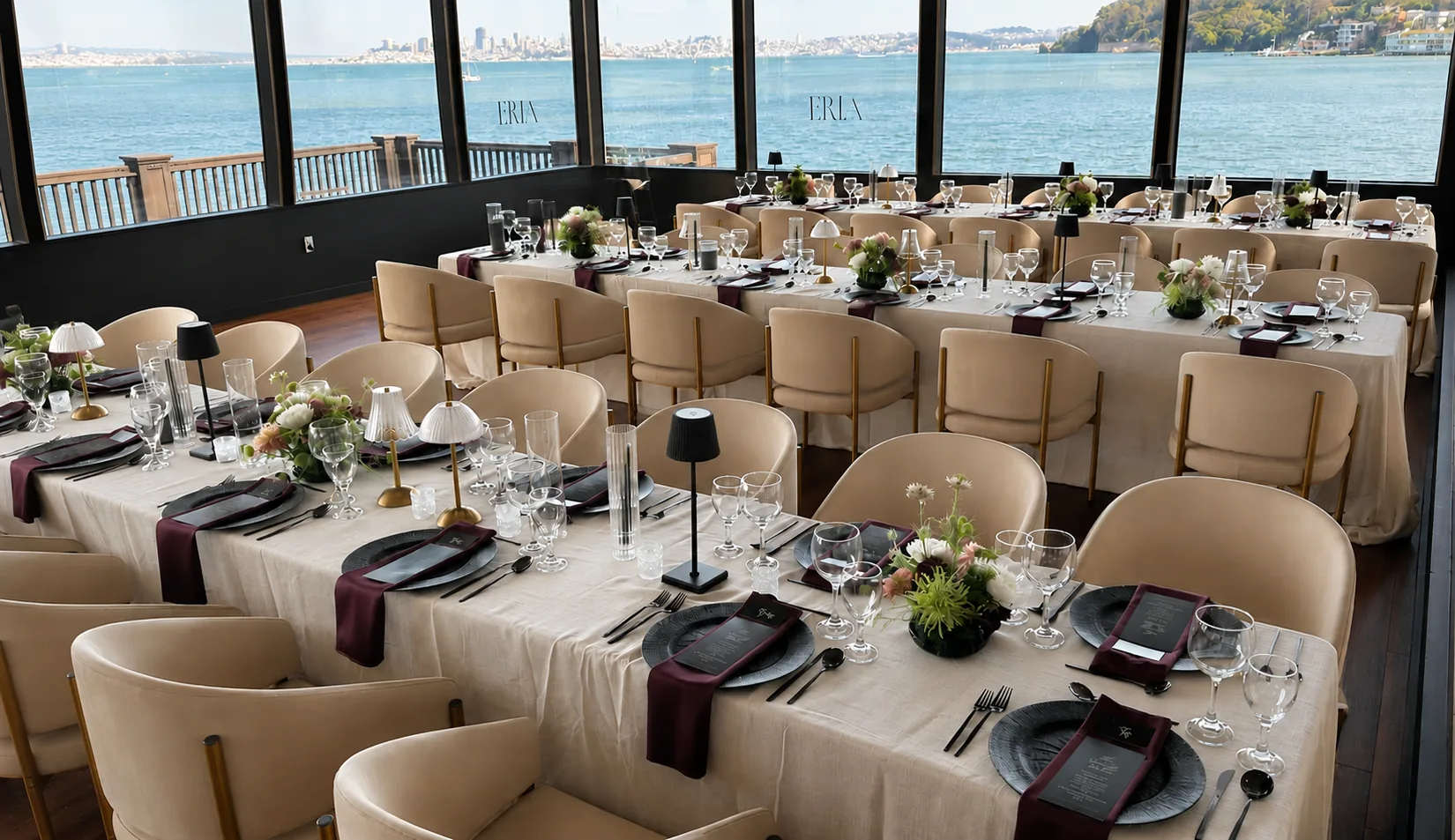
If you are choosing between several tables and one long table, consider who can hear and see whom. Review the private dining room layout guide alongside the guest map. The most photogenic arrangement is only useful if conversation can travel comfortably through it.
Brief hosts on hospitality, not interrogation
A host brief should fit on one page. Include pronunciation notes, the evening’s purpose, the people each host should welcome, and two or three introductions worth making. Also identify who will greet arrivals, who will give the welcome, and who can quietly resolve a practical problem.
Give hosts permission to enjoy the evening. They do not need to extract a business update from every guest. An opening question such as “What has been the most interesting part of your week?” leaves more room than “How is your procurement decision progressing?”
The best introductions provide a small bridge and then let people cross it themselves. “Alex, this is Priya. You both mentioned the challenge of keeping a small team connected while it grows” is enough. The host can stay for a moment, then make space for the conversation to develop.
Avoid distributing a dossier of personal facts. A thoughtful dinner should feel attentive, not researched in a way that unsettles the people attending.
Let arrival do some of the social work
Seating works better when guests have already had one easy exchange before sitting down. Build a short arrival period into the invitation and confirm how food and drinks will be offered during it. Assign a visible greeter so that an early guest is not left wondering whether they have arrived at the wrong entrance or at the wrong time.
Use the arrival period to introduce people who will sit near each other. Do not attempt to introduce every guest to everyone else. A sequence of hurried names is difficult to remember and makes the welcome feel like registration.
For a larger dinner, discreet place cards can remove uncertainty. If the gathering is genuinely casual and small, the host can guide people to seats directly. Whatever method you choose, make changes quietly when a guest arrives with an unexpected colleague or someone cancels.
Coordinate the conversation with service
The menu determines how often conversation pauses. Shared dishes can prompt a friendly exchange, but they also require space and passing. A plated meal can simplify the table while introducing more defined service moments. Neither format is automatically more suitable for a business dinner.
Discuss the options with the caterer and venue using the guide to private event menu and service styles. Ask where service staff will move, whether guests need to choose dishes in advance, and how individual requirements will be handled without repeated announcements.
Keep a welcome short and place it where the service team can support it. If there is a meaningful announcement, give it a clear beginning and end. Guests should understand when they are being asked to listen and when the evening belongs to their own conversations again.
End with room for a real goodbye
An invitation should make the expected ending clear. People may have family commitments, an early meeting, or travel arrangements. A graceful close lets them leave without feeling that they are abandoning the host.
Before guests depart, make any final introduction that has not yet happened. Follow up afterward with something specific and relevant: the introduction you offered to make, the resource someone requested, or a simple thank-you for a thoughtful conversation. Avoid treating every attendee as though they had agreed to a sales meeting.
When exploring ERIA Sausalito, bring the guest count, proposed format, and relationship goal to the planning conversation. Confirm the room, layout, access, service arrangements, and any presentation needs in the proposal. A good dinner begins with a room that supports the people in it.
Frequently asked questions
Should clients sit beside their account managers?
Sometimes. That relationship can offer an easy introduction, especially for a guest attending alone. It is also useful to create a new connection on the guest’s other side so the evening does more than reproduce an existing meeting.
Do we need an icebreaker at a client dinner?
Usually a warm introduction and a well-chosen question are enough. A formal activity is most useful when it serves the purpose of the gathering and guests understand why they are taking part. Participation should never feel like a test.
Should we change seats between courses?
Only when the size, service plan, and guests make it comfortable. Moving everyone repeatedly can interrupt good conversations and complicate service. A short standing welcome before dinner often creates variety with less disruption.
How much business should we discuss?
Set expectations in the invitation. A dinner described as a peer discussion can include a guided topic. A thank-you dinner should leave substantial room for conversation that is simply enjoyable. Your hosts can follow guests’ interest without turning every exchange toward a commercial objective.
Explore all planning guides → Sausalito celebrations →
Plan With ERIA
Ready to bring this to life?
Tell us what you are planning. Our team will help you shape the experience from first idea to final detail.
Start a Conversation