Event Planning · November 16, 2026 · ERIA Events · 8 min read
An awards dinner asks the room to move between two kinds of attention. During dinner, guests want to talk. During recognition, they want to hear the names, understand the achievement, and celebrate the person receiving an award. Problems arise when those moments compete with each other.
A well-paced evening gives both experiences enough room. Food arrives when guests can enjoy it. Remarks begin when the room is ready to listen. Recipients know where to go, the photographer knows what is coming, and the host can recover gracefully if a name takes longer to announce or a speech runs over.
For a company considering an awards dinner in Sausalito, the first planning document should be a run of show. It will tell you far more about the space, service, and technical support you need than an inspiration board alone.
Define what each award recognizes
Begin with the meaning of the recognition. A title such as “Excellence Award” does little work on its own. Write one plain sentence explaining what the recipient did and why it mattered. Specificity gives the audience a reason to applaud beyond the fact that a colleague’s name was called.
Keep the criteria consistent enough that the evening feels considered. If one person is recognized for a measurable project result and another for being popular, the audience may struggle to understand the program. That does not mean every contribution needs a number. Mentorship, patient problem solving, and care for colleagues can be described through a clear example approved for public sharing.
Confirm names, titles, pronunciation, and the wording on physical awards before production. Assign one person to maintain the approved list. A last-minute spreadsheet with several conflicting versions is an avoidable source of mistakes.
Count the time between the speeches
An award is more than the time spent reading its citation. It includes the introduction, applause, the recipient’s walk, the handover, a photograph, any response, and the return to a seat. These transitions are easy to omit from a rough agenda.
Consider an illustrative program with eight awards. If each takes four minutes from introduction to reset, the awards alone occupy 32 minutes. Add a five-minute welcome and a three-minute closing, and the planned attention time is already 40 minutes. Any video, group photograph, or acceptance speech needs its own allowance.
Use a rehearsal to check the estimate. Ask someone to walk the actual route if possible. A program can look brief on paper while requiring recipients to cross a crowded room one by one. Adjust the layout or timing before shortening the recognition itself to an uncomfortable rush.
Choose a structure that suits the meal
There are several sensible ways to arrange the evening. A short recognition block before dinner can work when guests have had an appropriate arrival offering and the food service is ready to follow. A program between courses can work if the caterer has planned for the pause. A final block before dessert can give the celebration a natural ending.
What rarely works well is beginning a long speech precisely when hot dishes are ready to leave the kitchen. The service team then faces a choice between interrupting the program and holding the food.
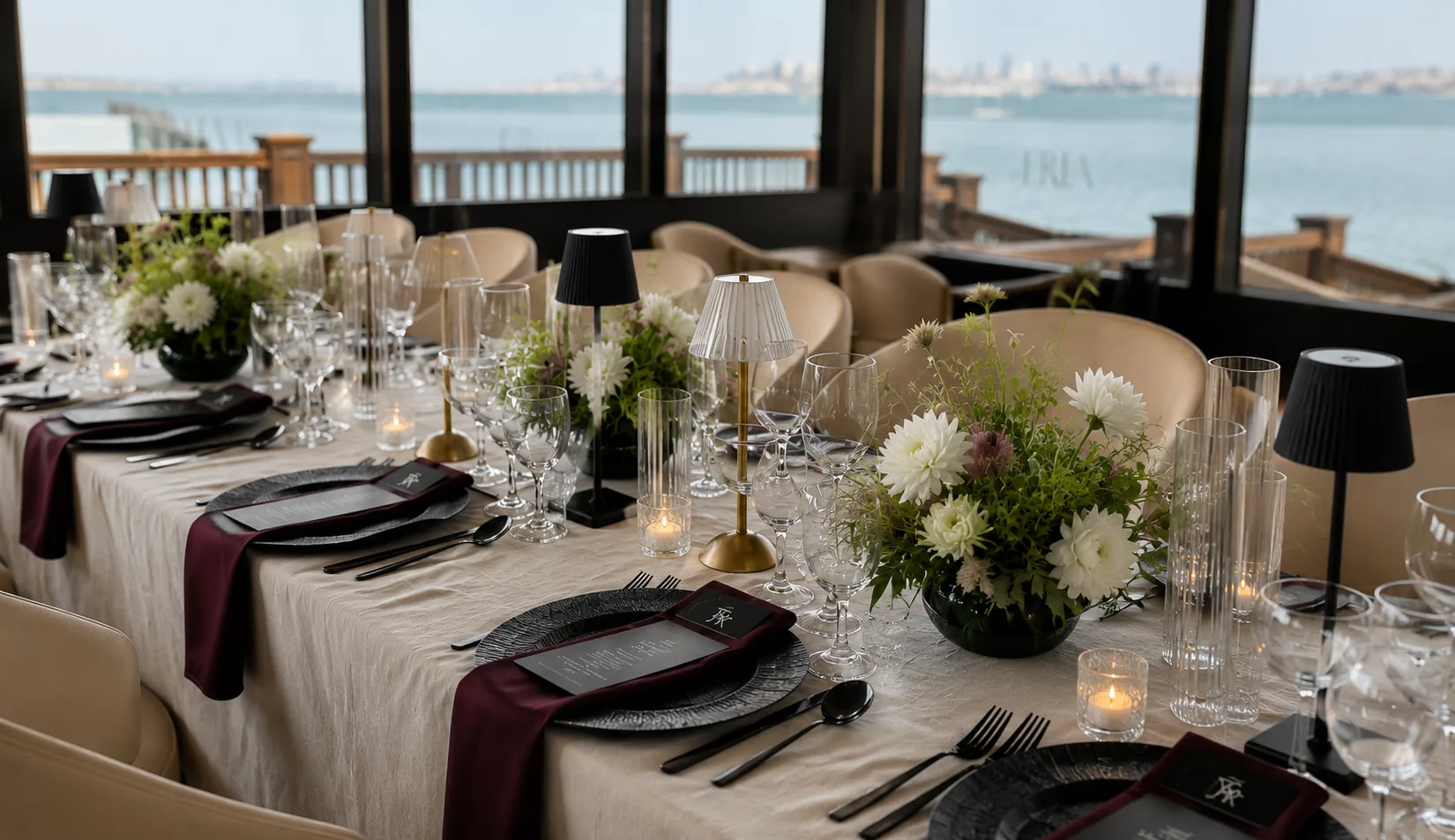
Discuss the run of show while choosing the menu. The private event service guide explains the practical differences between plated, shared, and reception formats. At an awards dinner, those choices also affect how easily the room can become quiet and how staff will move during presentations.
Make the room legible to every guest
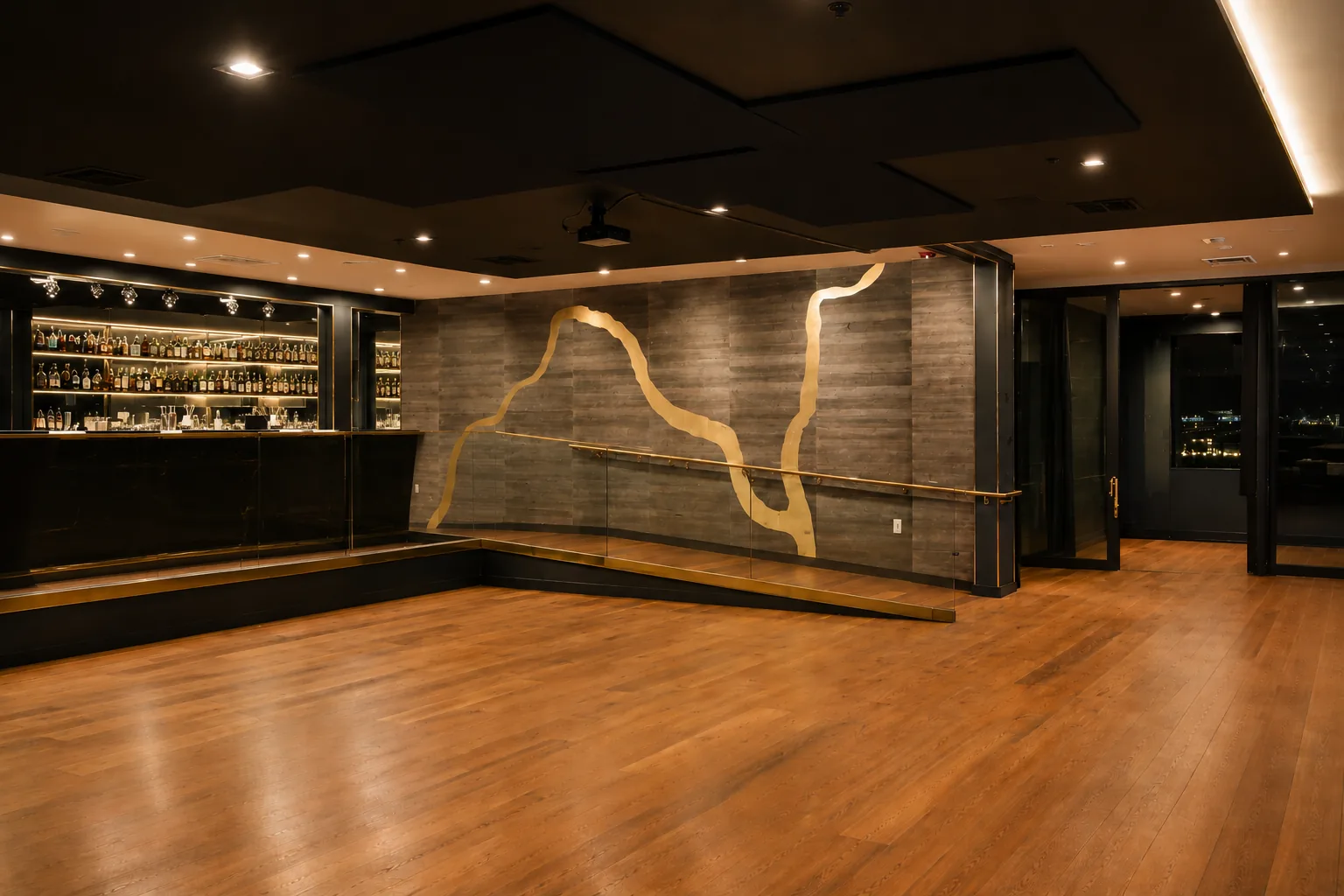
Guests need to know where attention is directed. Identify a presentation position that allows comfortable sightlines from the proposed seating. Check it from several actual seats, including the edges of the room. A clear view from the planner’s standing position does not prove that a seated guest can see past a centerpiece or another table.
Confirm the presentation setup with the venue. Ask what equipment is available, what must be brought in, who will test it, and who will operate it. A microphone, display, music cue, or video playback should have a named owner. Document the agreed arrangements and any associated charges in the proposal.
If people will walk to a presentation point, plan a clear route and discuss individual access requirements privately. Avoid building a moment around stairs, standing, or a long walk without checking what will be comfortable for the people being recognized.
Give the host a script that can be used aloud
A host script needs clear cues more than elaborate language. Put each award on its own section with the approved introduction, phonetic pronunciation where helpful, recipient name, presentation cue, photograph cue, and the line that moves the evening forward.
Use short sentences. Written corporate language often sounds heavy when spoken into a microphone. “She helped three teams agree on a workable launch plan” is easier to understand in a room than a paragraph about cross-functional alignment.
Make the host aware of anything that is meant to be a surprise. Also decide how to handle an absent recipient, a late arrival, or a technical failure. A useful fallback is usually simple: read the approved citation, acknowledge the person, and continue. The evening should not depend on a single video file opening successfully.
Set expectations for acceptance remarks
If recipients will speak, tell them in advance how much time they have and what kind of contribution you hope to hear. A one-minute thank-you and a five-minute reflection are different program elements. Do not assume everyone will infer the intended length from watching the first recipient.
Offer a comfortable alternative for someone who prefers not to speak. Receiving recognition should not require an unexpected performance. If an award is a surprise, the host can invite a brief response without making the microphone feel compulsory.
For team awards, choose the photograph plan ahead of time. Calling an entire department forward can be a lovely moment, but it requires space, time, and an agreed place for everyone to stand. A separate group photograph may be better when the room arrangement makes a large presentation difficult.
Build a working run of show
The internal schedule should include more than guest-facing times. Give each important moment an owner and a cue. A simple version might include arrival, seating, welcome, course service, recognition block, dessert, closing, and departure.
For every presentation block, record:
- Who signals that the room is ready.
- Who has the microphone and who receives it next.
- Which award, slide, or physical item must be ready.
- Whether service pauses or continues.
- What the host does if the program is behind time.
Keep the audience-facing agenda cleaner. Guests need the broad shape of the evening, not the backstage instructions. The internal document can be detailed without turning the invitation into a production schedule.
Protect the recognition when time slips
Decide before the event which elements can be shortened. An extra introduction, a second recap, or optional background commentary may be flexible. The citation that explains why someone is being honored deserves more protection.
Give one person authority to make timing calls and communicate them to the host and service team. Several people independently telling the kitchen or emcee to hurry creates conflicting directions. A single point of coordination keeps an ordinary delay from becoming visible confusion.
When arranging a site visit at ERIA, bring the approximate award count, guest count, meal format, and technical needs. A walkthrough of the presentation route and proposed seating can reveal practical adjustments early. The goal is an evening in which recognition feels generous because the planning around it is precise.
Frequently asked questions
How many awards should we give during dinner?
There is no universal number. Calculate the full time per award, including movement and photographs, then compare that total with the evening you want guests to experience. If the program overwhelms the meal, consider a shorter selection of live presentations and a separate form of recognition for other contributions.
Should award winners know in advance?
That depends on the purpose of the surprise and the recipient’s comfort. Even when the name remains secret, you can explain that brief remarks may be invited and confirm practical needs privately through a trusted organizer.
Can food service continue during the awards?
Sometimes, but the decision belongs in the service plan. Noise, staff movement, sightlines, and the type of course all matter. Confirm which moments require a pause rather than asking the team to improvise once the host begins speaking.
Do we need a professional emcee?
An internal host may be entirely suitable for a small, straightforward program. A longer evening with many cues may benefit from an experienced emcee or producer. Either way, preparation, clear wording, and a rehearsal matter more than assuming confidence will solve the timing.
Explore all planning guides → Sausalito celebrations →
Plan With ERIA
Ready to bring this to life?
Tell us what you are planning. Our team will help you shape the experience from first idea to final detail.
Start a Conversation
