Event Planning · November 16, 2026 · ERIA Events · 8 min read
Plan one day of hospitality, with distinct meals
A full-day offsite at ERIA Sausalito or ERIA Marina may include breakfast, lunch, afternoon refreshments and dinner. Approving each meal separately can leave you with the same format all day, a long gap without food or an evening count that includes people who have already left. Put the whole sequence on one page before choosing dishes.
Start with the working agenda and the people attending. Note when guests arrive, when each meal fits and when the group changes size. Then decide what should feel different at each stage. Breakfast may be an informal welcome, lunch a genuine pause and dinner the social close. The menu can follow that progression.
Set a separate headcount for every service
A single event attendance total is not enough for a day that changes shape. Some guests may arrive after breakfast, a speaker may join for lunch, and a smaller group may stay for dinner. Record the count for every meal, including any agreed meals for crew, facilitators or suppliers.
Give the caterer the final-count deadline and the change process a place in the planning calendar. Ask how increases, cancellations and additional dietary requests will be handled after signoff. The internal organizer should have one current meal list instead of several versions in email attachments.
Write down the service window as well as the count. A lunch for everyone at once makes different demands from a meal served to staggered groups. If dinner moves later, review the afternoon food and staffing too. A change to one meal can affect the rest of the day.
Menu direction one: a relaxed working day
For a straightforward offsite, an illustrative breakfast could combine pastries or toast, fruit, individual yogurt or a confirmed alternative, and coffee or tea. Lunch might be individually portioned sandwiches or wraps with a side dish. For dinner, discuss a shared main course, vegetables and an accompanying starch, followed by a simple plated dessert.
This direction moves from easy arrival food to a compact lunch and then a more social evening table. The practical question is whether dinner’s shared dishes fit among the place settings. Ask the caterer and venue team to review the furniture, serving pieces and staff needed for that final format.
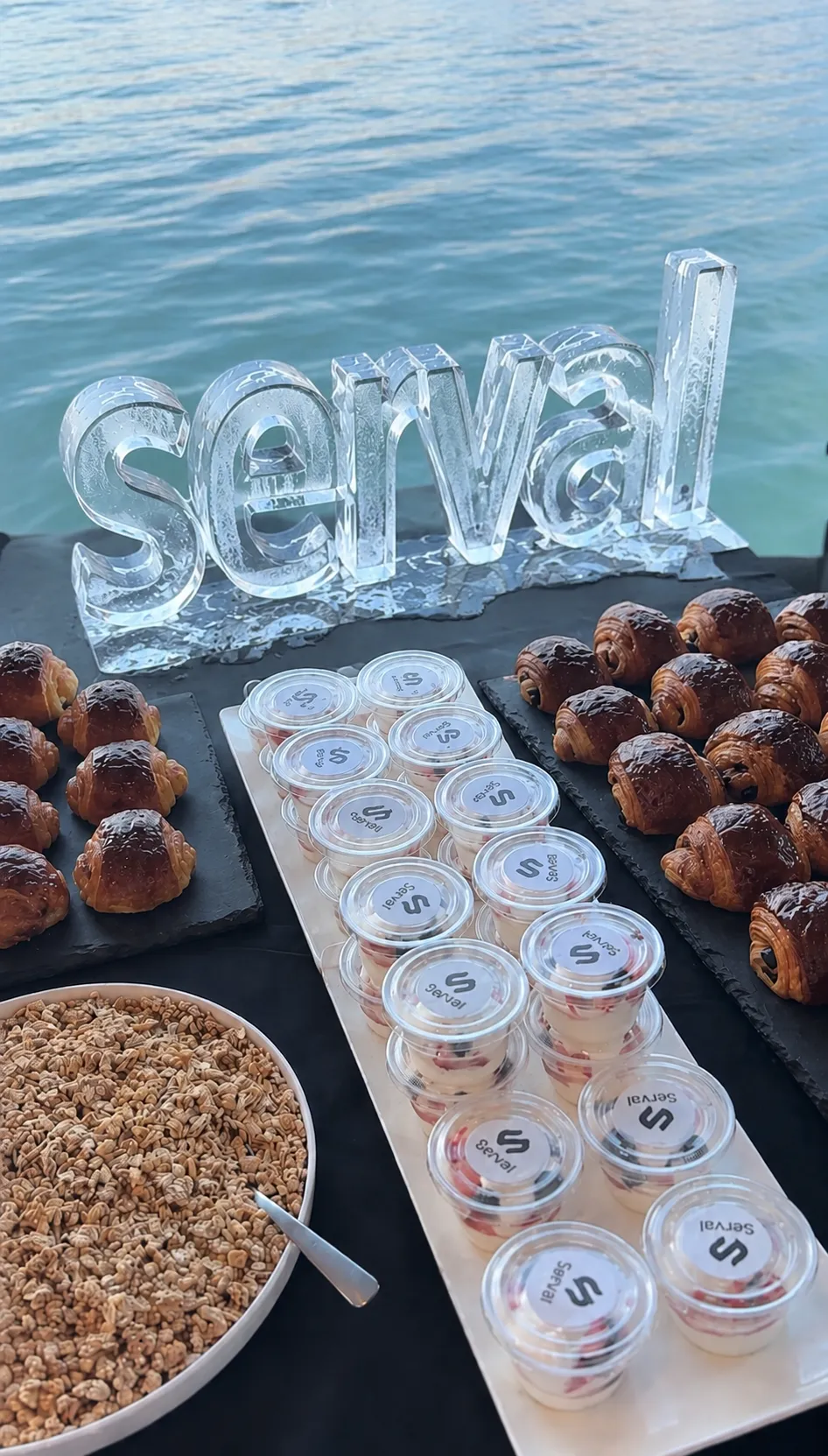
The photograph here shows a real breakfast display from ERIA’s corporate portfolio. Its pastries and individual cups illustrate different serving shapes; the sample menu in this guide is a separate planning idea, not an identification of every photographed ingredient.
Menu direction two: a vegetable-led day with clear choices
Another illustrative direction could begin with a savory breakfast item, fruit and an agreed hot-drink selection. Lunch might center on prepared vegetables, beans or another selected protein, rice or grains, and sauces portioned according to the service plan. Dinner could feature a substantial vegetable main alongside an additional main course chosen for the group, with sides that connect the meal.
Ask the caterer to make each confirmed dietary option a complete meal. The person receiving an alternative should not simply lose the main item while everyone else eats the intended menu. Discuss how the portions, preparation and serving method will work for the requests you actually receive.
A vegetable-led direction does not automatically meet vegan, gluten-free, allergy-related or religious requirements. Sauces, cooking methods and ingredient handling still matter. Use this as a conversation about style and choice, then obtain the caterer’s response to each specific request.
Menu direction three: a hosted breakfast and a seated close
For an offsite with a more formal beginning and ending, consider an illustrative seated breakfast with a prepared savory dish and fruit, followed later by a lunch buffet or individually served bowl. Dinner could begin with a plated starter, continue with a preselected main and finish with dessert and coffee.
The service rhythm gives the opening and closing meals a sense of occasion while keeping lunch comparatively flexible. It also requires a realistic timetable. Preorders, staffing, plates and room preparation need to be agreed, particularly if the same space hosts the working sessions and the dinner.
Compare this direction using the complete service quote rather than the names of the dishes alone. Ask which staff, equipment, linen, glassware and access hours it requires. These three directions are illustrative menus to develop with the catering team; they are not fixed ERIA packages.
Keep refreshments visible in the brief
Coffee, tea, water and snacks often disappear between the headline meals. List them as actual services: what is available, when it is set out, who replenishes it and when it finishes. Discuss an afternoon option if there is a long interval between lunch and dinner rather than assuming a leftover breakfast display will cover it.
Consider variety across the day. If breakfast centers on baked items, lunch and the afternoon break can offer a different format. If dinner includes several courses, the arrival offering may have a different role from the substantial food needed before a much later meal. Let the catering team advise on portions for the complete sequence.
For the evening, agree water service and appealing nonalcoholic choices alongside any bar arrangements. ERIA does not allow outside liquor. Wine arrangements are venue-specific and should be confirmed with the team. Beverage availability, staffing and charges belong in the proposal.
Collect dietary requests privately and resolve them early
Give attendees a private way to share dietary requests with a named organizer. Ask for the information the caterer needs to respond, and avoid inviting personal details that are irrelevant to the meal. When clarification is necessary, arrange direct communication with the catering lead rather than interpreting the request yourself.
Keep three things distinct in your list: what the attendee requested, what has been sent to catering and what the caterer has confirmed. A note saying “vegetarian requested” is not the same as a confirmed alternative for all three meals. Track breakfast, lunch, refreshments and dinner individually so an accommodation does not stop after the first service.
Share request details only with the people who need them for planning and service. The event agenda and general attendee list do not need to display them. For allergy or preparation questions, the catering team should explain ingredients, handling and any limitations directly. Do not promise suitability from a dish name or a photograph.
Check the menu as a complete service plan
Before signoff, review the whole day with the venue and catering leads. Confirm which kitchen and service areas are available, how food arrives and where equipment is stored between meals. At Sausalito, each floor has its own commercial kitchen. Outside catering requires approval and a certificate of insurance; kitchen access and fees are agreed as part of the booking.
For every meal, identify who supplies plates, cutlery, glassware, serving pieces and labels. Confirm setup, replenishment, clearing and waste removal. If different suppliers handle breakfast and dinner, make the handoff explicit so one team does not remove equipment the next expects to use.
Finish with a single approved menu and service sheet. Include a version date, meal counts, confirmed individual orders, service times and the named person who can approve changes. Any later amendment should reach the people preparing, serving and identifying the food, not just the internal planning chat.
Bring ERIA a brief that connects the food to the day
Send your date, preferred venue, attendance by meal, draft agenda and overall budget. Explain whether you want an easy working day, a more hosted programme or a particular culinary direction. Share any known dietary requirements through the agreed private channel and ask when the final information is needed.
Include the end of the event in that conversation. Dinner, staff departure, supplier collection and room restoration may extend beyond the final meeting. A complete brief makes it possible to compare proposals on the same basis and create a day in which each meal has a clear place.
Questions teams ask
Should breakfast, lunch and dinner use the same service style?
They can, but consider the purpose and pace of each meal. An informal breakfast, a practical lunch and a seated dinner may suit the day better than repeating the same experience throughout.
When should we collect dietary requirements?
Build collection into the attendee response process and use the deadline agreed with the caterer. Leave time to clarify requests and confirm how they will be handled at each meal.
Can we choose one of these sample menus as an ERIA package?
These are illustrative directions. The team will discuss your event, confirm catering availability and develop a written proposal with the menu, service and charges for your booking.
Plan the rest of your offsite
Plan lunch within the working day
Plan the closing leadership dinner
Explore ERIA corporate event planning
Contact ERIA about your offsite
Explore all planning guides → Sausalito celebrations →
Plan With ERIA
Ready to bring this to life?
Tell us what you are planning. Our team will help you shape the experience from first idea to final detail.
Start a Conversation