Event Planning · November 16, 2026 · ERIA Events · 8 min read
The first seconds of a speech can set its entire tone. A guest looks up, a chair turns, a conversation finishes and the room decides where to direct its attention. When the speaker begins before those things happen, even a thoughtful toast can disappear into the sound of dinner.
Good speech planning gives the speaker and the audience a comfortable way into the moment. It also gives the event team a precise instruction about what should happen next. For a wedding reception, anniversary dinner or company celebration at ERIA Sausalito, the work starts with a short list of people and a realistic place in the evening. Equipment matters, but the plan around it matters too.
Decide what each speech is there to do
A welcome, a thank-you, a family toast and an award introduction have different jobs. Naming the purpose helps a speaker understand what to include and what to leave for conversation later. It also makes repetition easier to spot before the event.
For example, if the host welcomes everyone and thanks the organizing team, the next speaker does not need to repeat the full list. They can tell a story or introduce the next part of the celebration. A hypothetical anniversary dinner might have a brief welcome, two family reflections and a closing toast. That gives each contribution a distinct place.
Write down the speaker's name, pronunciation, relationship to the occasion, topic and agreed duration. Ask speakers whether they will use notes, a screen or an object. A person who plans to show photographs needs a different preparation from someone delivering a simple toast.
Put speeches where guests can listen
Choose a moment when most guests will be in the same place and able to see the speaker. Consider the service plan rather than fitting speeches into an empty box on the timeline. Clearing plates, serving a course and delivering a heartfelt story can all compete for the same attention.
Discuss the sequence with the catering lead. A short welcome before dinner may work well, while longer remarks may need a deliberate pause between courses. Make sure the kitchen knows which moments are fixed and which can move a few minutes if service needs more time.
Avoid asking a speaker to compete with an active bar queue or a room full of guests still finding seats. A host representative can give people a gentle transition: a short announcement, music lowered, and a moment for conversations to finish. That transition belongs in the schedule.
Plan a visible speaking position
Choose where each speaker will stand or sit. Check the view from several guest positions, especially behind floral arrangements or other guests. A central location on a floor plan is not automatically a clear location in a furnished room.
Consider the photographer as well. A speaker standing with their back to the guest of honor may be easy for the room to hear but difficult to photograph meaningfully. A modest change in angle can let the camera capture both the speaker and the person receiving the toast.
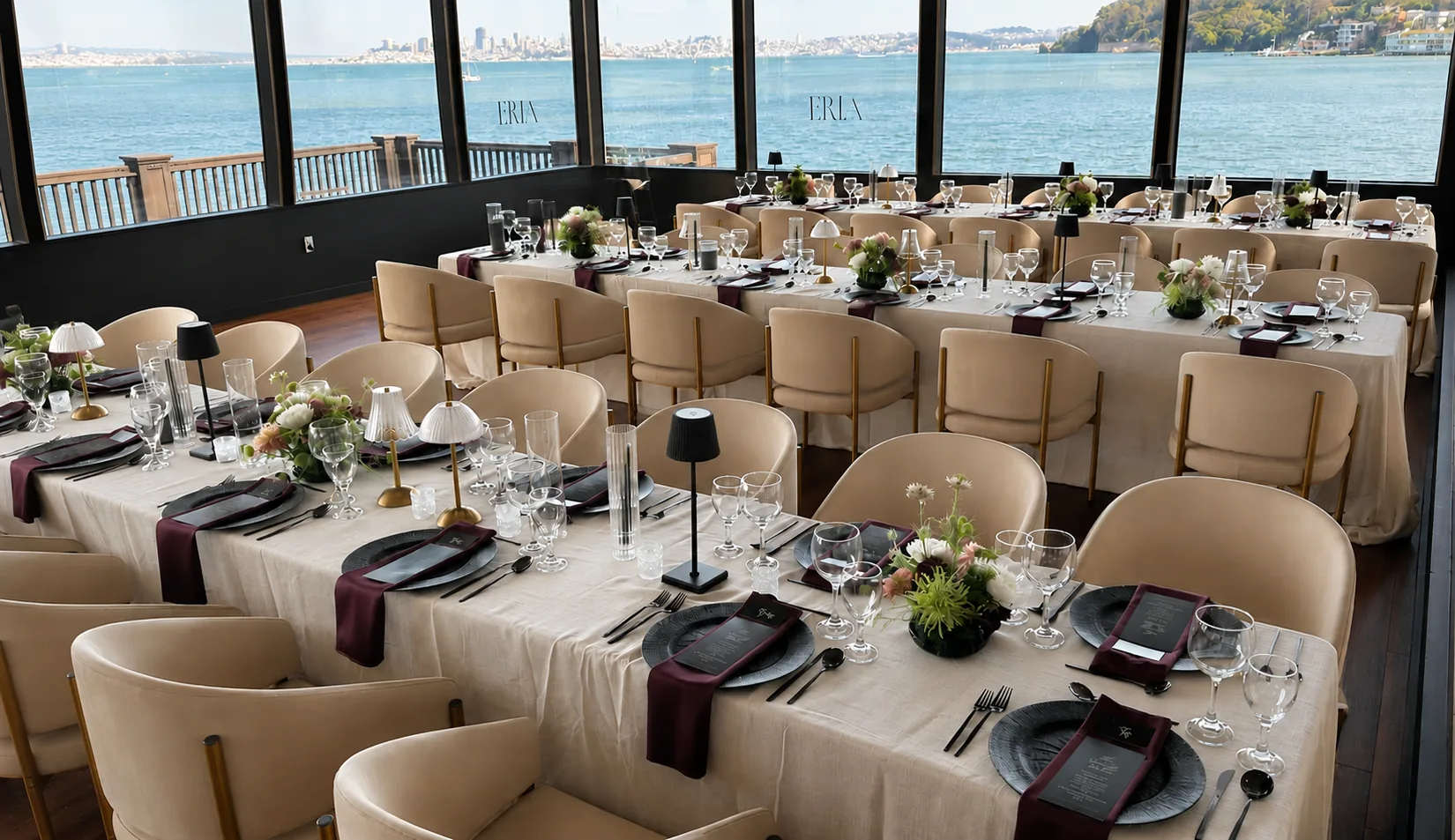
Confirm the available sound equipment and its suitability with the venue or your contracted AV supplier. Do not assume a microphone, technician or connection is included because it appears in a photograph. If you are considering ERIA Sausalito, use the site visit to identify the planned speaking position and discuss your event's requirements.
Test the actual setup
A sound check should reproduce the event as closely as practical. Test the microphone from the intended speaking location, with a listener checking several parts of the room. Use normal speech rather than a quick tap on the microphone. The purpose is to hear whether words are clear where guests will sit.
If a presentation, video or music cue is involved, test the exact file on the playback device and connection that will be used. Confirm that the person responsible has the final version. A link in someone's inbox is a fragile plan when the person is also greeting guests.
Agree on who controls volume and who handles a problem during the program. The host should know the name of the responsible person, and that person should know the cue to intervene. Confirm equipment placement and cable management with the event team so the speaking arrangement fits the approved room setup.
Give speakers a brief they can remember
Send a small, practical note in advance. Include their approximate speaking time, the person introducing them, where they should be beforehand, the agreed length and the audience. Tell them whether other speakers will follow so they can shape their ending.
Offer simple content guidance. A personal story works best when people outside the inner circle can follow it. Explain unfamiliar names and avoid a chain of inside jokes that excludes most of the room. A story about the guest of honor should also feel comfortable for that person to hear in public.
Ask speakers to practice aloud. A draft that looks short on a phone can run longer once laughter, pauses and emotion enter the room. They do not need to sound rehearsed to benefit from knowing where their story ends.
Make the microphone handoff someone's job
The microphone should move through an agreed sequence. A host representative, planner or contracted program lead can introduce speakers and manage the handoff if that responsibility is part of their agreed role. Ask them explicitly rather than assuming they will notice when to act.
Tell each speaker whether to return the microphone or pass it to the next person. Avoid leaving it on a dining table where someone may mistake an informal comment for an invitation to speak. If spontaneous toasts are welcome, set a clear point for them and have the program lead manage the order.
For a family celebration, the host may prefer to invite a few people privately instead of announcing an open microphone. That can protect the evening's pace while still making space for meaningful contributions.
Build a short cue sheet
The following hypothetical sequence illustrates the level of detail a cue sheet needs. The times and durations are examples, not a booking schedule.
- 7:15 p.m.: Catering lead confirms the course has been cleared. Program lead asks the sound operator to lower background music.
- 7:17 p.m.: Program lead welcomes attention, introduces the first speaker and hands over the microphone.
- 7:18 p.m.: First speaker delivers an agreed three-minute toast.
- 7:21 p.m.: Program lead takes back the microphone and introduces the second speaker.
- 7:22 p.m.: Second speaker delivers an agreed three-minute toast.
- 7:25 p.m.: Program lead closes the segment and cues music. Catering lead resumes the planned service.
Include the person's name beside each responsibility in the actual document. Add a clear rule for a delay: for example, the catering lead and program lead agree on a revised start together. The written schedule should help people coordinate, not force them to interrupt an unfinished course.
Protect the rest of the evening
Leave room around the speech segment for attention to settle and guests to reconnect afterward. If several speakers each exceed their time by a few minutes, the combined delay can consume the next activity. Agree in advance on a gentle signal for wrapping up.
Keep a simpler backup version of any presentation. A speech should still make sense if a video cannot play. If a speaker cannot attend, decide whether someone reads their message, a recording is used or the segment is removed. The program lead needs an answer before the introduction begins.
Pair this plan with the private-event menu and service guide. When food, room layout and speeches are planned together, the audience can give a moment its full attention and then return naturally to the celebration.
Frequently asked questions
How many speeches should a private dinner include?
Choose the number based on the purpose and length of the gathering, then give each speaker a distinct role. Three short contributions with clear subjects can feel more complete than a long list of people repeating similar thanks.
Does a small dinner need a microphone?
It depends on the room, guest arrangement, background sound and speakers. Test whether everyone can comfortably follow normal speech from the planned position. Confirm a suitable solution with the venue or AV supplier rather than deciding solely from guest count.
Can guests make surprise speeches?
They can if the host wants that format and the program lead can manage it. A planned window with an agreed order is easier to accommodate than interruptions throughout dinner. Check that the guest of honor is comfortable with the idea.
Should we play background music under the speeches?
Make that an intentional choice with the sound operator. Clear words are the priority. For most conversational toasts, lowering or pausing the music is a straightforward way to focus attention and avoid competing sound.
Explore all planning guides → Sausalito celebrations →
Plan With ERIA
Ready to bring this to life?
Tell us what you are planning. Our team will help you shape the experience from first idea to final detail.
Start a Conversation